
Known For
Acting
Born
Nov 15, 1936
Place of Birth
Hamburg, Germany
Credits
44 titles
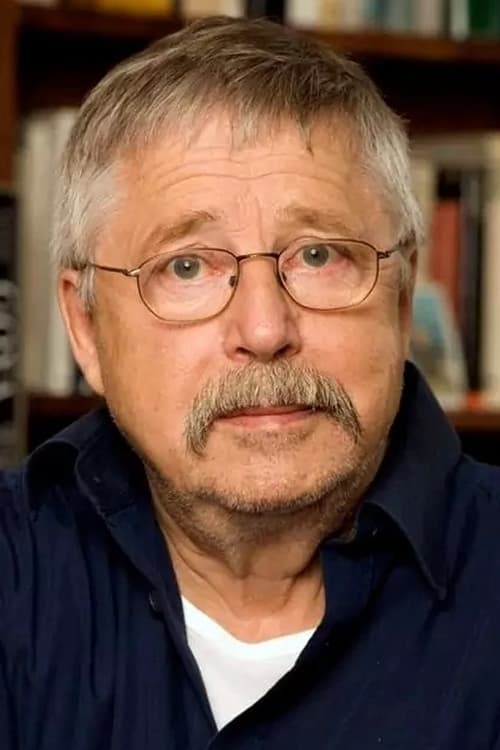
Wolf Biermann
Biography
Karl Wolf Biermann (born 15 November 1936) is a German singer-songwriter, poet, and former East German dissident. He is perhaps best known for the 1968 song "Ermutigung" and his expatriation from East Germany in 1976. Biermann was born in Hamburg, Germany. His mother, Emma (née Dietrich), was a Communist Party activist, and his father, Dagobert Biermann, worked on the Hamburg docks. Biermann's father, a Jewish member of the German Resistance, was sentenced to six years in prison for sabotaging Nazi ships. In 1942, the Nazis decided to eliminate their Jewish political prisoners and Biermann's father was deported to Auschwitz concentration camp, where he was murdered on 22 February 1943. Biermann was one of the few children of workers who attended the Heinrich-Hertz-Gymnasium (high school) in Hamburg. After the Second World War, he became a member of the Free German Youth (Freie Deutsche Jugend, FDJ) and in 1950, he represented the Federal Republic of Germany at the FDJ's first national meeting. Upon finishing school at the age of 17, Biermann emigrated from West to East Germany where he believed he could live out his Communist ideals. He lived at a boarding school near Schwerin until 1955, and then began studying political economics at the Humboldt University of Berlin. From 1957 to 1959, he was an assistant director at the Berliner Ensemble. At university he changed courses to study philosophy and mathematics under Wolfgang Heise until 1963, when he completed his thesis. Despite his successful defense of his thesis, he did not receive his diploma until 2008 when he was also awarded an honorary doctorate degree. In 1960, Biermann met composer Hanns Eisler, who adopted the young artist as a protégé. Biermann began writing poetry and songs. Eisler used his influence with the East German cultural elite to promote the songwriter's career, but his death in 1962 deprived Biermann of his mentor and protector. In 1961, Biermann formed the Berliner Arbeiter-Theater ("Berlin Workers' Theater"), which was closed in 1963 before the production of Biermann's show Berliner Brautgang, which documented the building of the Berlin wall. The play was officially banned and Biermann was forbidden to perform for six months. Although a committed communist, Biermann's nonconformist views soon alarmed the East German establishment. In 1963, he was refused membership in the ruling Socialist Unity Party of Germany (SED), although no reason was given at the time for his rejection. After the Wende, documents available from Biermann's file at the Stasi Records Agency revealed that the reviewers were under the impression that he was a regular user of stimulants, leading to the rejection of his application. ... Source: Article "Wolf Biermann" from Wikipedia in English, licensed under CC-BY-SA 3.0.
Known For





Filmography
Biermann
Self
Stasi: A State Against Its People
Self (archive footage)
phoenix persönlich
Self
Stöckl
Self
Schawinski
Self
Erlesen
self

Markus Lanz
Self
Schmidt & Pocher
Thadeusz
self
Fröhlich lesen
Self
Im Palais
Self
Our Best
Self
NDR Kultur – Das Journal
Self
Das Jahrhundert des Theaters
Self
BAP - Ode to Cologne
Self
Weimarer Salon
Self
Das Jahrhundert des Kabaretts
Self (archive Footage)
Koschwitz
Self
Volle Kanne
Self
Sternstunde Philosophie
Self
Sabine Christiansen
Self
Nachtstudio
Self
Im Dialog
self
Morgenmagazin
Self

Riverboat
Self

DAS!
Self
Berlin 1990
Self
ZDF-Mittagsmagazin
Self
Nachtcafé
Self

Victoires de la musique
Self
Leute
Self

Wetten, dass..?
Self
Heut' abend
self
NDR Talk Show
Self
Germany in Autumn
Self
Club 2
Self
Litera-Tour
Self
Kölner Treff
Self
3 nach 9
Self
Le Grand Échiquier
Self
Deutscher Kleinkunstpreis
Self

Born in '45
Songs
Auf der Lesebühne der Literarischen Illustrierten
Self
Zur Person
Self