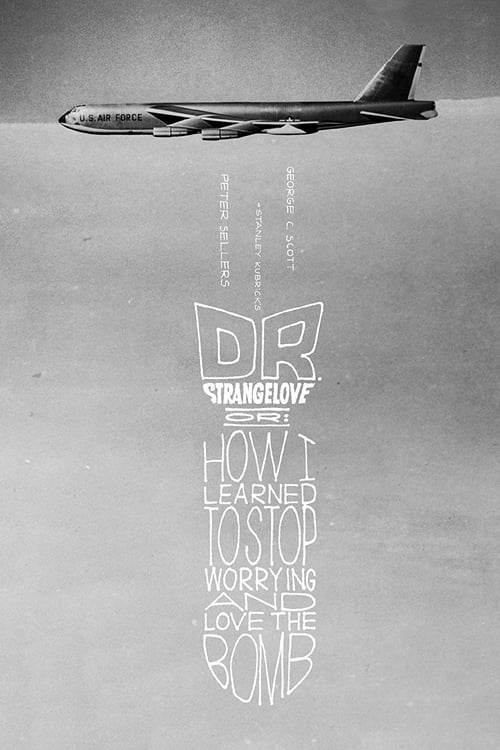
Dr. Strangelove or: How I Learned to Stop Worrying and Love the Bomb
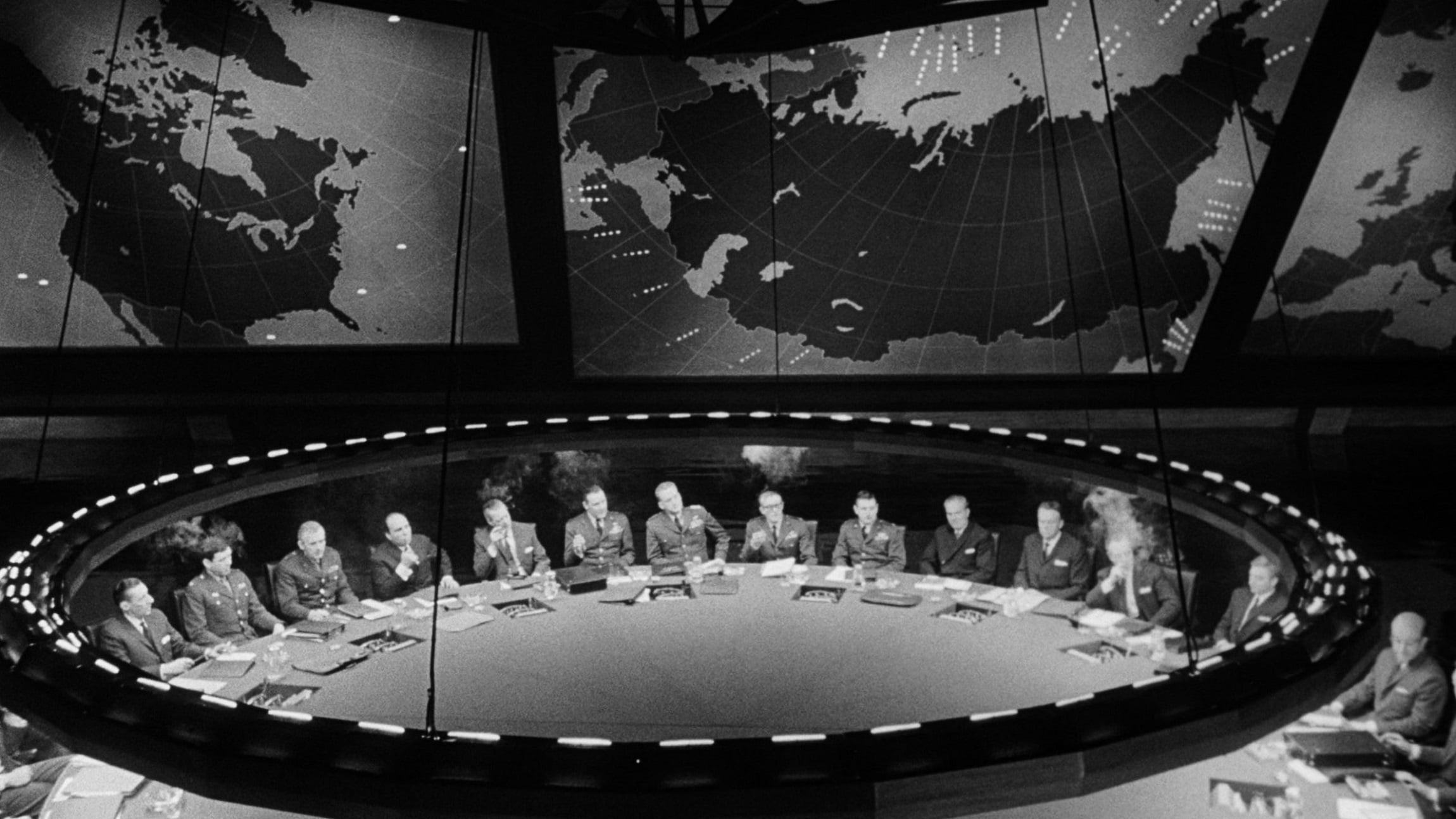
After the insane General Jack D. Ripper initiates a nuclear strike on the Soviet Union, a war room full of politicians, generals and a Russian diplomat all frantically try to stop it.
Trailers & Videos 6
Original Trailer
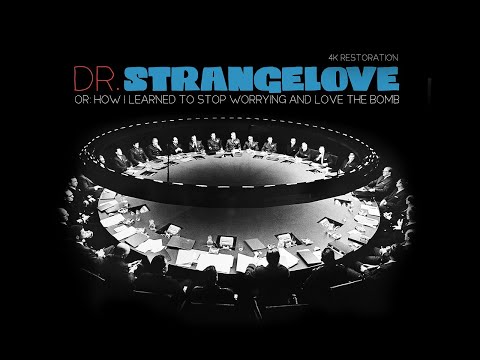
Re-Release Trailer
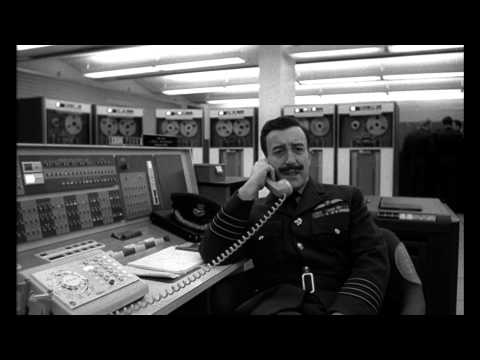
Trailer
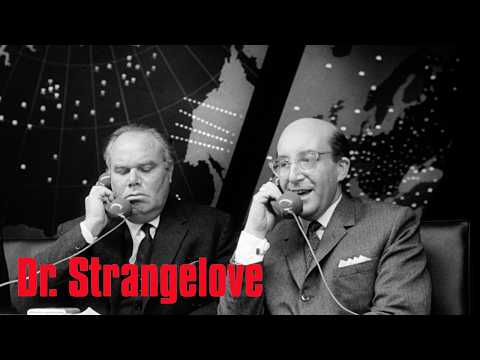
Hello Dimitri?
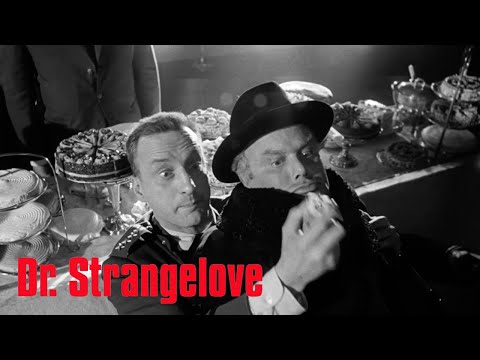
This is the War Room!

Armando Iannucci on a new stage version of Dr Stra...
Cast
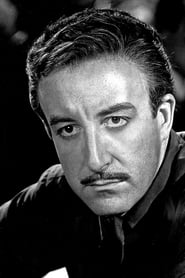
Peter Sellers
Group Capt. Lionel M...
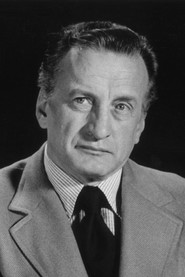
George C. Scott
General 'Buck' Turgi...
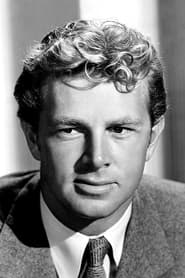
Sterling Hayden
Brigadier General Ja...
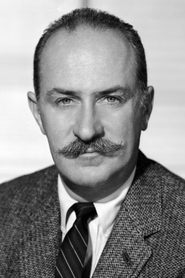
Keenan Wynn
Colonel Bat Guano
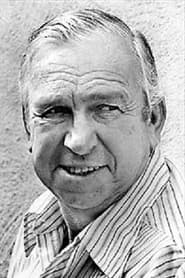
Slim Pickens
Major "King" Kong
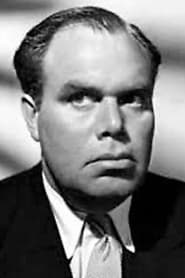
Peter Bull
Botschafter De Sades...
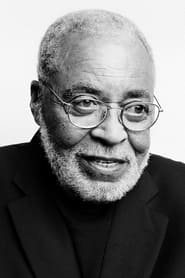
James Earl Jones
Lt. Lothar Zogg

Tracy Reed
Miss Scott
Jack Creley
Mr. Staines
Frank Berry
Lt. Dietrich
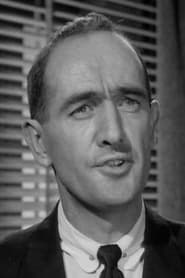
Robert O'Neil
Adm. Randolph

Glenn Beck
Lt. Kivel
Ratings & Reviews
No community reviews yet. Be the first to share your thoughts!
TMDB Reviews
8 years ago
Stanley Kubrick's 1964 film Dr. Strangelove is a hilarious film about the nuclear annihilation of the human race. Its plot combines three strands that lead inevitably to this doomsday. In the first, an Air Force base commander (Sterling Hayden) goes insane and launches the go-code for his B52s to drop the bomb on their targets in Russia, while a British captain on an officer exchange program (Peter Sellers) tries to reason with him. In the second strand, we see the crew of a B52 commanded by the cowboyish Major Kong (Slim Pickens) as they prepare to drop the bomb. Finally, there are the scenes from the Pentagon war room, where the American president (again Peter Sellers) harangues a general (George C. Scott) about how this could have happened, until the mysterious German scientist Dr. Strangelove (Peter Sellers yet again) offers a solution.
Originally meant to be a straightforward adaptation of a political thriller novel, Dr. Strangelove became a madcap comedy. The characters' sexual quirks, anti-Communist hysteria and nonchalance about the coming apocalypse and are exaggerated to the point of farce. No other Peter Sellers film shows off his range of talents so well: he segues effortlessly between Captain Mandrake, a nervous fellow with a British accident already antiquated at the time the film was made, the staid American politician President Merkin Muffley, and Dr. Strangelove, one of the Nazi scientists that the USA brought over after World War II.
Filmgoers must have perceived this film somewhat differently, when the threat of nuclear annihilation felt very real. Contemporary audiences won't fully get how black this black comedy is. Nonetheless, this film remains perennially funny, and even after numerous viewings over the last 15 years or so I still laugh every time.

6 years ago
A U.S. bomber plane is heading for Russia. Communications are unavailable. The Commie Russians have built a doomsday device. And, according to crazy, (wheelchair-bound?), ex-Nazi scientist, Dr. Strangelove, nuclear destruction is upon us all! Thanks to this eccentric comedy, I now have considerable respect for the talent of Peter Sellers. How he pulled off three totally different roles so convincingly is just beyond me. Especially his portrayal of the U.S. President; I could hardly believe that British Peter Sellers could do an American accent that naturally. This was apparently a very black comedy for its time, as the threat of nuclear war was really a thing when this was filmed. Offbeat, humorous script includes some eyebrow-raising, edgy dialogue and scenes.
Would I recommend? Yes, to those with a open mind, or a taste for a truly bizarre kind of comedy.

Filipe Manuel Neto
TMDB3 years ago
Sex and war in an extremely sarcastic and intelligent film.
This film is one of the best of director Stanley Kubrick's career, and is also one of the most iconic and acidic satire that cinema has ever seen. Inspired by a tense novel that was published in the same period, and by the political and military events that were taking place at the time, the film shoots in all directions to give us the most absurd and ridiculous image of the rivalry between the USA and the Soviet Union. Despite everything, and all the points in favor, I don't think this film is a true comedy. To me, honestly, it didn't make me laugh, although I absorb and understand the acidic irony that is here.
The script begins with a very serious incident that could be true (and the US even reviewed its military strategies in order to prevent something similar from happening in real life): after inventing, in his troubled mind, a crazy conspiracy theory according to which the Soviets are poisoning American drinking water, a crazed general initiates a pre-orchestrated military protocol designed to retaliate against a Russian attack with the full force of their nuclear arsenal. But with one detail: there was no Russian attack, which would make the Americans the aggressor country, and responsible for a holocaust of biblical proportions. Informed of this, the president meets with his generals and, in direct articulation with the Kremlin, tries by all means to prevent the worst.
What's extraordinary about this film is the way it ridicules the sexual arousal that several characters have around nuclear war. For these characters, the end of the world, total war, is an absolute fetish, portrayed in almost erotic detail. The most obvious cases are Generals Ripper and Turgidson: each, in his own way, vehemently expressing the mental connection they make between sex and war. Whether by the way they speak and express themselves, or more implicitly, by holding phallic elements that are increasingly evide...

CinemaSerf
TMDB2 years ago
Just as "Seven Days in May" was hitting our screens, Stanley Kubrick used a superbly over-the-top effort from Sterling Hayden to depict a rogue general who has decided to use all the checks and balances in place to defend the United States to his own mischievous advantage and launch a pre-emptive bombing campaign on those pesky "Ruskies". It's only his perfectly moustachioed British executive officer "Mandrake" (Peter Sellers) who smells a rat, but he is on lockdown in their air force base that is, indeed, being besieged - but not by the "Reds". Meantime, the American President (also Sellers) is only just finding out that he's about to start a nuclear war and nobody knows quite how to top it - not even his chief of staff "Turgidson" (George C. Scott). A call to his opposite number in the Kremlin reveals that the Soviets haven't been letting the grass grow, and that they have their own shield - and one that's use would make the effects of the Hiroshima bomb look like a damp squib. With all this mistrust and mayhem abounding, is it going to be possible to avert the destruction of humanity? Sellers has multiple parts and carries them out effectively, but it's the support from Hayden, Scott and the gung-ho, yee-ha, merchant "Maj. Kong" (Slim Pickens) - in charge of the heavily laden bomber that is likely to stat the conflagration, that demonstrate really entertainingly not just the faults in the whole principle of a paranoia-driven command and control structure, but also of the flaws of human nature when it comes to increasing reliance on technology and automation. The calculating eponymous character, who could have come straight out of a "Bond" movie, also quite cleverly points to the provenance of so many of the scientists who supported the West's military programming whilst their historical loyalties were dubious at best. It's only ninety-odd minutes, but packs plenty to think and laugh about as the ridiculousness and seriousness of the scenario are presented satiric...
2 months ago
Stanley Kubrick's, Dr. Strangelove or: How I Learned to Stop Worrying and Love the Bomb (1964) is the best satire of all time. The film is over 60 years old and has aged perfectly, every joke, both the layered and the brilliantly stupid, land today just as well as they did in '64. This film is Kubrick at his best, the film doesn't feel cold and detached like some of his other work, if anything this film feels deeply personal. The film's greatest moment is it's final sequence. The collection of real-world bomb explosions paired with Vera Lynn's "We'll Meet Again" is such a beautifully devastating sequence that leaves the viewer with one thought: "War is terrible". It's a horrific sequence paired with such a non-horrific song. It's a song that balances heartbreak and optimism. The film spends its entire runtime making fun of everyone involved in war. Every person in a position of power is mocked and portrayed as foolish. Both the Americans (the main targets) and the Russians are mocked throughout the film in various ways, usually targeting their intelligence. The most famous shot from this film is a brilliantly simple metaphor. Air Force Major T. J. "King" Kong riding the bomb as it falls, waving his hat and hollering with joy on the way down, is Kubricks way of saying that war, and especially the atomic bomb, is reckless and foolish. It's a simple visual idea, communicated with absolute effectivity. It's blunt, yet well done. And then there is, of course, Peter Seller's performance as three different characters across the film. Those characters being, Group Captain Lionel Mandrake, President Merkin Muffley, and the titular Dr. Strangelove. It works incredibly well. You can hardly even tell it's the same actor at times. While, this was one of Peter Seller's acting specialties, being able to play multiple characters, he does it so wildly well here that it elevates the film ten-fold from just his performances alone. It's so very impressive, being able to make yours...