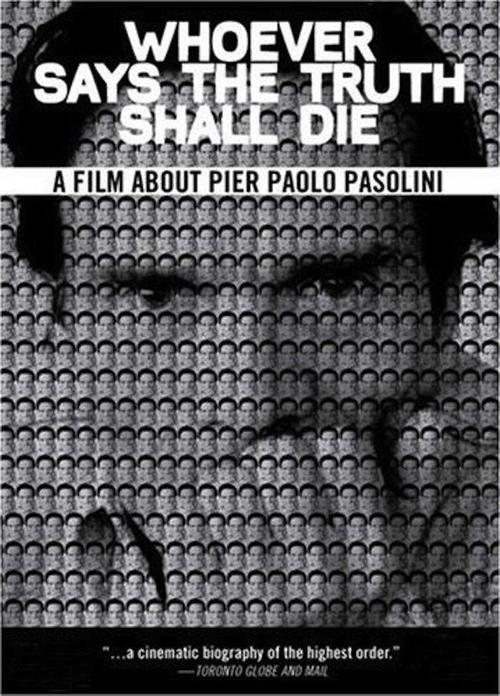
Whoever Says the Truth Shall Die
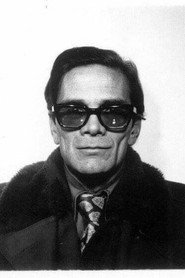
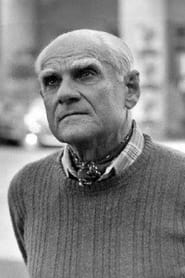
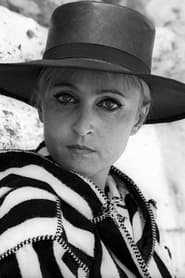
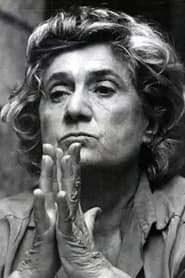
Philo Bregstein tells us this film looks at Pasolini's life and art to explain why he died. The film traces Pasolini's life chronologically - family roots, hiding during World War II, teaching, moving to Rome, being arrested and acquitted many times, publishing poems, getting into film, being provocative, and being murdered. Interviews with Alberto Moravia, Laura Betti, Maria Antonietta Macciocch, and Bernard Bertolucci are inter-cut with readings of Pasolini's poems and with clips from four films - primarily the Gospel According to St. Matthew - to illustrate his changing ideas and points of view. Bregstein makes a case for Pasolini's being lynched.
Trailers & Videos 1
Whoever Says The Truth Shall Die - Pier Paolo Paso...
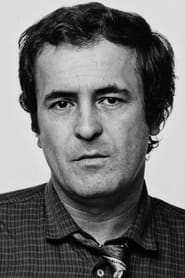
Cast
Ratings & Reviews
No community reviews yet. Be the first to share your thoughts!
TMDB Reviews
3 years ago
On November 2, 1975, film maker Pier Paolo Pasolini was brutally beaten, and then run over by a car, ending the life of an inconvenient thorn in the side of the powers-that-be in Italy. Pasolini was born in 1922 to a rich military father who gambled away most of the family's money, and a vocally anti-fascist mother. Pasolini became a follower of Mussolini anyway, and published a volume of poetry during World War II. Things changed after the politically motivated murder of Pasolini's younger brother, and Pasolini turned into a Communist who longed for Italy's return to greatness as experienced in the Roman Empire and Renaissance eras.
Pasolini began to teach high school. An open homosexual, he was acquitted of charges of having sex with his students, but was fired anyway. He became fascinated with the young slum boys of Rome, and the writings of political dissident Antonio Gramsci. Pasolini was a walking contradiction. He supported Communism but attacked conformity. He began writing novels and essays, eventually branching into film making with "Accattone," where he was assisted by a young Bernardo Bertolucci.
Pasolini specialized in neorealism- realistic films about everyday people with epic characterizations, but soon entered mythic film making with such works as "The Gospel According to St. Matthew," "The Decameron," "Oedipus Rex," "The Canterbury Tales," and "Arabian Nights." Pasolini's prolific writing continued as well, making him the scourge of both the left and right wings of Italian political circles. Then came "Salo, or The 120 Days of Sodom." Pasolini turned people into objects to attack consumerism in this violent tale of torture. It was to be his last film, although his next project was about a modern day St. Paul in the United States.
The investigation into Pasolini's death was hurried and sloppy. A seventeen year old male prostitute was sentenced to nine years in jail for the murder, even though no blood was found on the boy's clothes, and the...