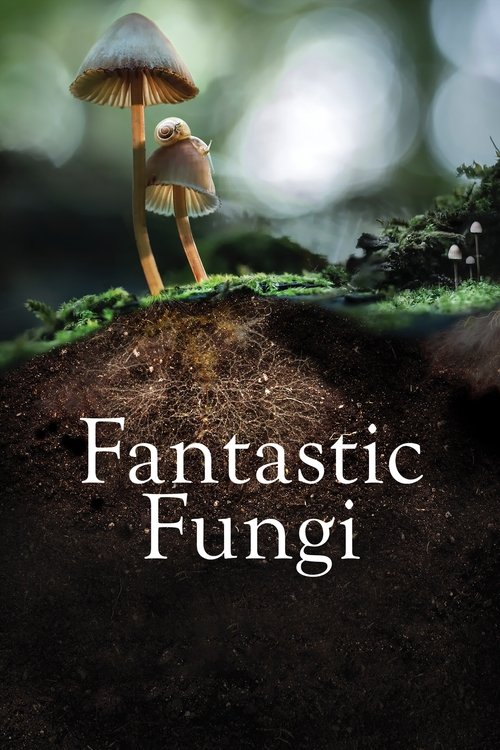
Fantastic Fungi
A vivid journey into the mysterious subterranean world of mycelium and its fruit— the mushroom. A story that begins 3.5 billion years ago, fungi makes the soil that supports life, connecting vast systems of roots from plants and trees all over the planet, like an underground Internet. Through the eyes of renowned mycologist Paul Stamets, professor of forest ecology Suzanne Simard, best selling author Michael Pollan, food naturalist Eugenia Bone and others, we experience the power, beauty and complexity of the fungi kingdom.
Trailers & Videos 1
Fantastic Fungi, Official Film Trailer | Moving Ar...
Cast





Ratings & Reviews
No community reviews yet. Be the first to share your thoughts!
TMDB Reviews
3 months ago
Fantastic Fungi (2019) insists that mushrooms are intelligent — and they certainly are, compared to the quote-unquote experts featured in this pseudocumentary. Then again, the narration, from the point of view of a mushroom (or all of them, unless this particular one is using the royal “we”), doesn’t make them seem like the sharpest knife in the kitchen: “You can’t see us, but we bloom around you. Everywhere, in everything and even within you, whether you believe in us or not.” Huh? Who doesn’t “believe” in mushrooms? Is there such a thing as “fungus denial”?
According to Fantastic Fungi, not only are fungi intelligent and capable of communication, but they are also at least partially responsible for human intelligence and language — or at least this is what the “Stoned Ape Hypothesis” proposes. This theory, which has all the scientific basis of Jack and the Beanstalk, argues that Homo evolved from Erectus to Sapiens by virtue of eating psychedelic mushrooms found in cow dung. The only conclusion to be drawn from this is that someone was definitely on drugs when they made this stuff up.
Back to the supposed fungal communication, the film posits that “Trees communicate using the mycelium as pathways … we are finding in our research that plants can recognize their own relatives. So these mother trees recognize their relatives through their mycorrhizal networks.” Isn’t it pretty to think so?
However, plants are living beings with cellulose cell walls, which lack nervous or sensory organs. Animals do not have cellulose cell walls, but they do have nerve or sensory organs. Animals are sentient; plants are not. Animals can experience pain, pleasure, and various emotions. Plants cannot. A brain and a nervous system are necessary for sentience; even if fungi are more animal than plant, but like plants, they have no brain or nervous system. Plants react to physical and chemical stimuli, but there is no justification for claiming that plants are aware of these rea...