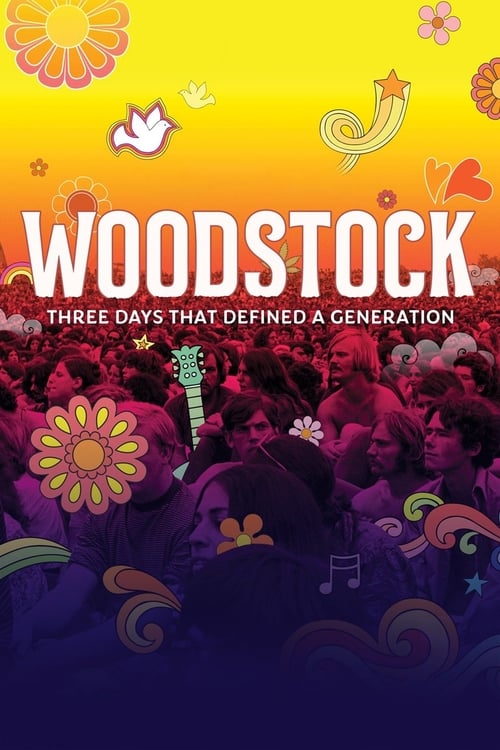
Woodstock: Three Days That Defined a Generation
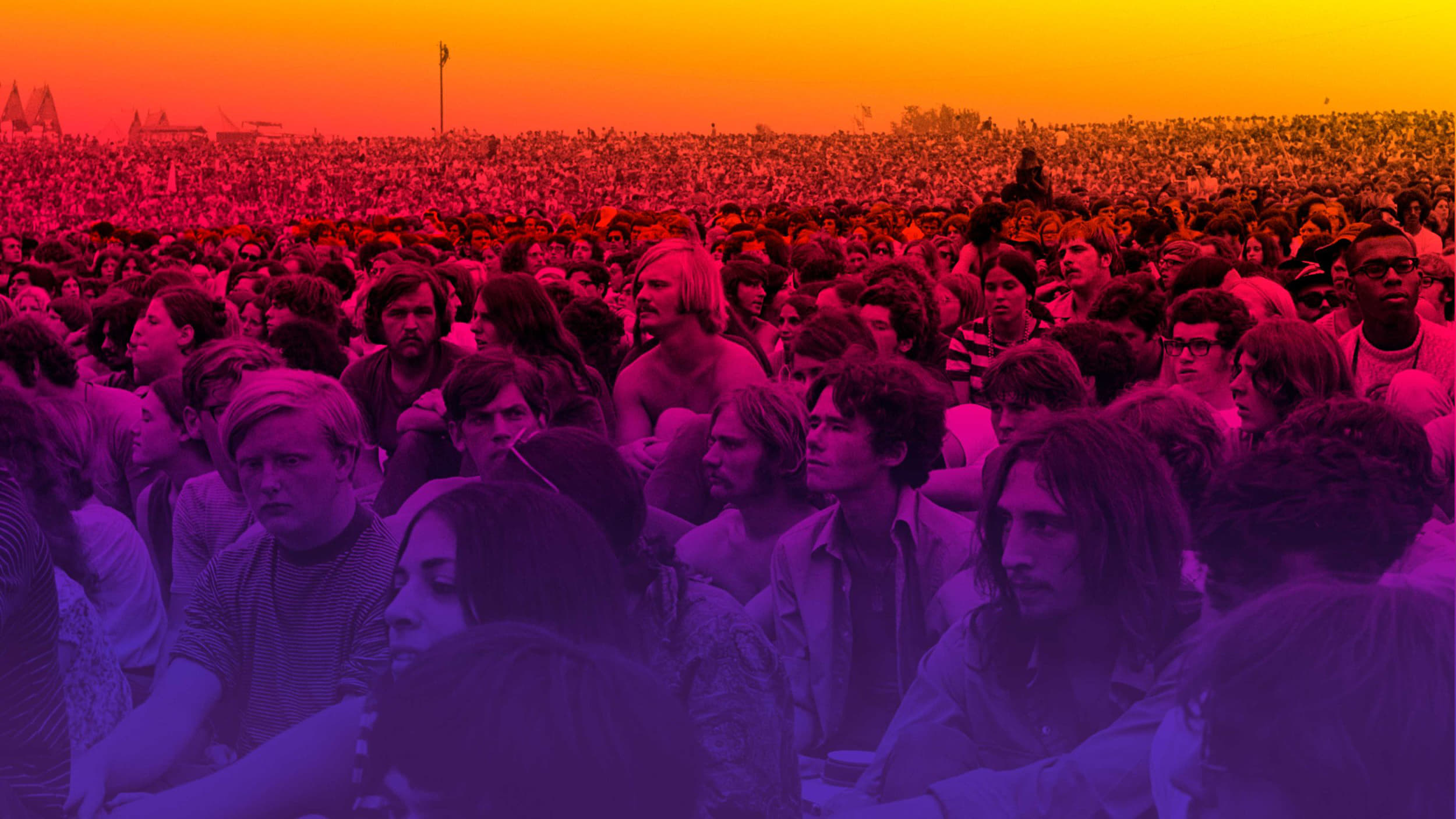
50 years after the legendary fest, Barak Goodman’s electric retelling of Woodstock, from the point of view of those who were on the ground, evokes the freedom, passion, community, and joy the three-day music festival created.
Trailers & Videos 1

WOODSTOCK: THREE DAYS THAT DEFINED A GENERATION (2...
Cast




Ratings & Reviews
No community reviews yet. Be the first to share your thoughts!
TMDB Reviews

6 years ago
For a moment there was peace, love and joy... a moment only
Released 50 years after the event, “Woodstock: Three Days that Defined a Generation” documents the iconic concert that took place for 3.5 days in mid-August, 1969, at the height of the Vietnam fiasco and the counterculture movement. The initial estimates for attendance were up to 50,000 with later top guesstimates around 150,000. WAY more people came than expected and it was the biggest gathering of people in one place in history, over 400,000, only beat by the infamous Isle of Wight concert in England a year later.
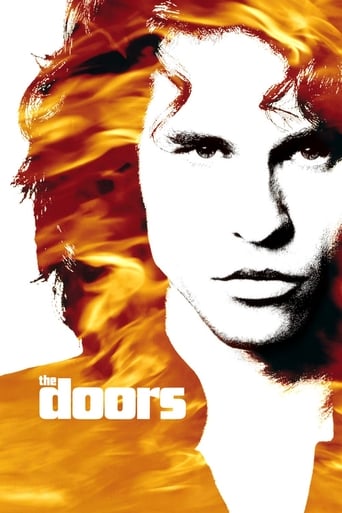
The film shows the good and bad of the hippie culture, but mostly the good. Generally speaking, the movement was a reaction against the Vietnam war and the sterile legalism that America and similar countries had devolved into by the early-mid 60s. The youth wanted freedom, peace and love and you can see this in the flick. It was a good thing. Yet you can also see the bad, like acid trips. Both Janis Joplin and Jimi Hendrix appeared at Woodstock, but they'd be dead in a little over a year, both only 27 years-old. Jim Morrison & the Doors didn't play because they declined at the last moment and later regretted it. Jim died shortly after the other two, also only 27. Interestingly, Jethro Tull declined because Ian Anderson didn't like hippies and was concerned about things like inappropriate nudity (?!).
Nevertheless, Woodstock was an amazing event, never to be repeated. They tried at Altamont Speedway in California less than four months later, and also at Isle of Wight, but both festivals turned out badly and put the kibosh on the movement's noble ideals, even though it was pretty much inevitable since freedom without wise parameters naturally devolves into chaos and self-destruction.
Like the original 1970 documentary, this new version is fascinating and supremely entertaining, but it doesn’t focus on the music as much. There are snippets of songs, but never full cuts. This versi...