
Motherless Brooklyn
New York City, 1957. Lionel Essrog, a private detective living with Tourette syndrome, tries to solve the murder of his mentor and best friend, armed only with vague clues and the strength of his obsessive mind.
Trailers & Videos 1

Official Trailer
Cast
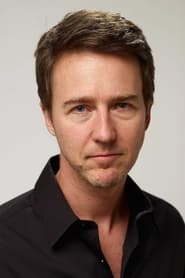
Edward Norton
Lionel Essrog

Bruce Willis
Frank Minna

Gugu Mbatha-Raw
Laura Rose

Alec Baldwin
Moses Randolph

Willem Dafoe
Paul Randolph

Bobby Cannavale
Tony Vermonte
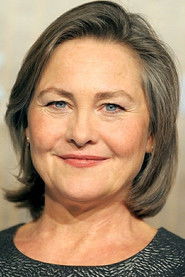
Cherry Jones
Gabby Horowitz
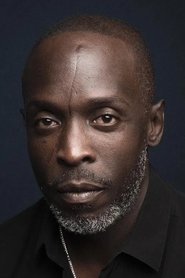
Michael Kenneth Williams
Trumpet Man

Leslie Mann
Julia Minna
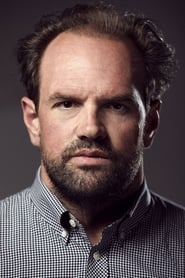
Ethan Suplee
Gilbert Coney

Dallas Roberts
Danny Fantl

Josh Pais
William Lieberman
Ratings & Reviews
No community reviews yet. Be the first to share your thoughts!
TMDB Reviews

Stephen Campbell
TMDB6 years ago
Looks great and is well acted, but the pacing is turgid
I raise my stein to the builder who can remove ghettos without removing people as I hail the chef who can make omelettes without breaking eggs.
- Robert Moses; Open letter to Robert Caro, refuting many of the claims in Caro's biography of Moses, The Power Broker: Robert Moses and the Fall of New York (August 26, 1974)
Have you ever felt, in the course of reading a detective novel, a guilty thrill of relief at having a character murdered before he can step onto the page and burden you with his actual existence? Detect__ive stories always have too many characters anyway. And characters mentioned early on but never sighted, just lingering offstage, take on an awful portentous quality. Better to have them gone.
- Jonathan Lethem; Motherless Brooklyn (1999)
In his introduction to The Wire: Truth Be Told (the official companion book to the greatest TV show ever made), series creator David Simon writes that although it may appear to be a cop show, in reality, The Wire is "about politics and sociology, and, at the risk of boring viewers with the very notion, macroeconomics." In a similar(ish) manner, Jonathan Lethem's 1999 novel Motherless Brooklyn may appear to be an old-fashioned private-eye noir, but in reality, it's about gentrification, institutionalised racism, political corruption, and how such things are woven into New York City's historical fabric. It's about how the city of today was built on the cruelty, prejudice, lies, and unchecked power of yesterday.
Lethem's novel is a fascinating and quintessentially postmodern narrative, fracturing the relationship between the physical and the temporal by taking the sensibilities of 1950s gumshoe noir and supplanting them into an end-of-century milieu. On the other hand, the 1957-set film is more literal, less interested in playing with form. Written for the screen, produced, directed by, and starring Edward Norton, this two...

SWITCH.
TMDB6 years ago
It's a difficult task to pace a noir for a modern audience, and you can feel the two and a half hour runtime. The story is interesting and the parallels to America in the present day are welcomed, but there isn't enough tonal balance to contrast all the shadowy moodiness. The plot is on the more convoluted side, and you'd imagine that with it being a story about following a trail of clues, 'Motherless Brooklyn' would reward repeat viewings - but I'm not sure I would optionally sit through all of it again. There is nothing inherently wrong with this film, bar some odd edits and framing choices, and Norton tackles the material fairly well, creating a great tribute to the noir era of filmmaking. It sometimes treads the line of parody rather than homage, but for anyone in the mood for crime mystery in the vein of 'Chinatown' or 'L.A. Confidential', this will absolutely hit the spot.
- Joel Kalkopf
Read Joel's full article... https://www.maketheswitch.com.au/article/review-motherless-brooklyn-a-neo-noir-set-in-1950s-new-york
4 years ago
Motherless Brooklyn’s lead performance recalls two previous Ed Norton outings: Primal Fear and The Score. In the latter two, Norton plays, respectively, a cold-blooded killer posing as a stuttering altar boy, and a thief posing as a mentally-challenged janitor; in the former, he plays Lionel Essrog, a private investigator with Tourette’s syndrome.
The key difference is that Lionel really does have Tourette’s and isn’t just pretending. In Primal Fear and The Score there is a performance-within-a-performance, with the character pulling a Sun Tzu and appearing weak when he’s strong in order to achieve an ulterior goal. Conversely, there is no means-to-an-end scenario in Motherless Brooklyn; the protagonist’s handicap is genuine, and while Norton does this medical condition justice like only he can, it sadly turns out to be a hindrance not only for the character, but also the actor, the movie, and even the audience.
There is enough material here for two films, and Norton, who writes, produces, and directs, neglects to edit; perhaps he should have been as involved in his own movie’s cutting process as he was in American History X’s, instead of leaving the responsibility to the undistinguished Joe Klotz. The first film follows an individual with Tourette’s as he juggles his disorder, his job, and his personal relationships. The second, which doesn’t need the Tourette’s angle, involves a murder mystery that takes us from Harlem’s jazz clubs to Brooklyn’s slums to the drawing rooms of the rich and powerful. Norton would have done well to focus on the first story; first, because of his performance, which strikes a prodigious balance between tactful and funny. And second, because Tourette isn’t the film’s only malady; the plot, such as it is, is a dull intrigue concerning urban renewal and housing relocation – and outside an 80s family comedy wherein the gang must save the old people’s home from being torn down to make room for a parking lot, it is near impossible to...
4 years ago
Motherless Brooklyn’s lead performance recalls two previous Ed Norton outings: Primal Fear and The Score. In the latter two, Norton plays, respectively, a cold-blooded killer posing as a stuttering altar boy, and a thief posing as a mentally-challenged janitor; in the former, he plays Lionel Essrog, a private investigator with Tourette’s syndrome.
The key difference is that Lionel really does have Tourette’s and isn’t just pretending. In Primal Fear and The Score there is a performance-within-a-performance, with the character pulling a Sun Tzu and appearing weak when he’s strong in order to achieve an ulterior goal.
Conversely, there is no means-to-an-end scenario in Motherless Brooklyn; the protagonist’s handicap is genuine, and while Norton does this medical condition justice like only he can, it sadly turns out to be a hindrance not only for the character, but also the actor, the movie, and even the audience.
There is enough material here for two films, and Norton, who writes, produces, and directs, neglects to edit; perhaps he should have been as involved in his own movie’s cutting process as he was in American History X’s, instead of leaving the responsibility to the undistinguished Joe Klotz.
The first film follows an individual with Tourette’s as he juggles his disorder, his job, and his personal relationships. The second, which doesn’t need the Tourette’s angle, involves a murder mystery that takes us from Harlem’s jazz clubs to Brooklyn’s slums to the drawing rooms of the rich and powerful.
Norton would have done well to focus on the first story; first, because of his performance, which strikes a prodigious balance between tactful and funny.
And second, because Tourette isn’t the film’s only malady; the plot, such as it is, is a dull intrigue concerning urban renewal and housing relocation – and outside an 80s family comedy wherein the gang must save the old people’s home from being torn down to make room for a parking lot, it is near impo...