Paul, Apostle of Christ
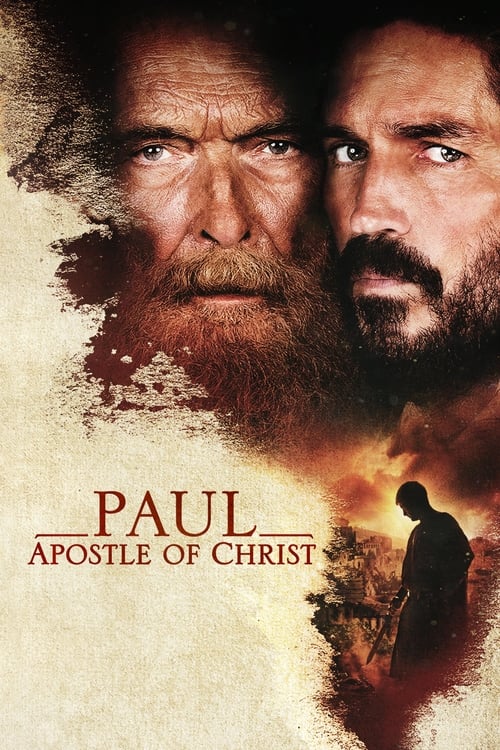
Luke risks his life to visit Paul in a Roman prison, where the apostle awaits execution under Nero. As Paul reflects on his past and the Christian community faces persecution, Luke resolves to record the story of the early church.
Trailers & Videos 2

Official Trailer
Teaser Trailer
Cast









Ratings & Reviews
No community reviews yet. Be the first to share your thoughts!
TMDB Reviews
4 years ago
Can you be said to lead by example when the example is spurious? Paul, Apostle of Christ is the early Christianity 'success story' of the conversion of Mauritius Gallas (Olivier Martinez), Commander of the Third Legion of Rome, and Prefect of the Mamertine Prison.
Actually, I’m not even sure Mauritius officially converted; he certainly formed a better opinion of Christians after Saint Luke cured his daughter of an indeterminate disease. I guess the filmmakers deserve some credit for not presenting this as a miracle (Luke saves the little girl’s life through his medical knowledge), but it really makes no difference anyway because there was no sick child, no Mauritius Gallas, no Third Legion, no nothing.
This is a kind of artistic license that goes well beyond the fact that everyone in Nero’s Rome speaks fluent English (with a French accent, in Martinez’s case). Mauritius’s conversion (if indeed he converted) doesn’t carry as much weight as, say, that of Constantine, and not because the latter was an Emperor and the former a humble prefect; the problem is that Mauritius’s change of heart doesn’t appears to take place, not as a sign of personal growth, but simply because it’s in the script.
I mean, if you’re just going to make shit up, why stop at one conversion? Why not go ahead and make it so that the entire Third Legion accepted Jesus Christ into their hearts as their Lord and Savior?
Luke is only slightly less fictional than Mauritius, and equally problematic. A "Luke," to whom tradition assigns authorship of the Gospel of Luke and the Acts of the Apostles, was mentioned by Paul in three of his epistles.
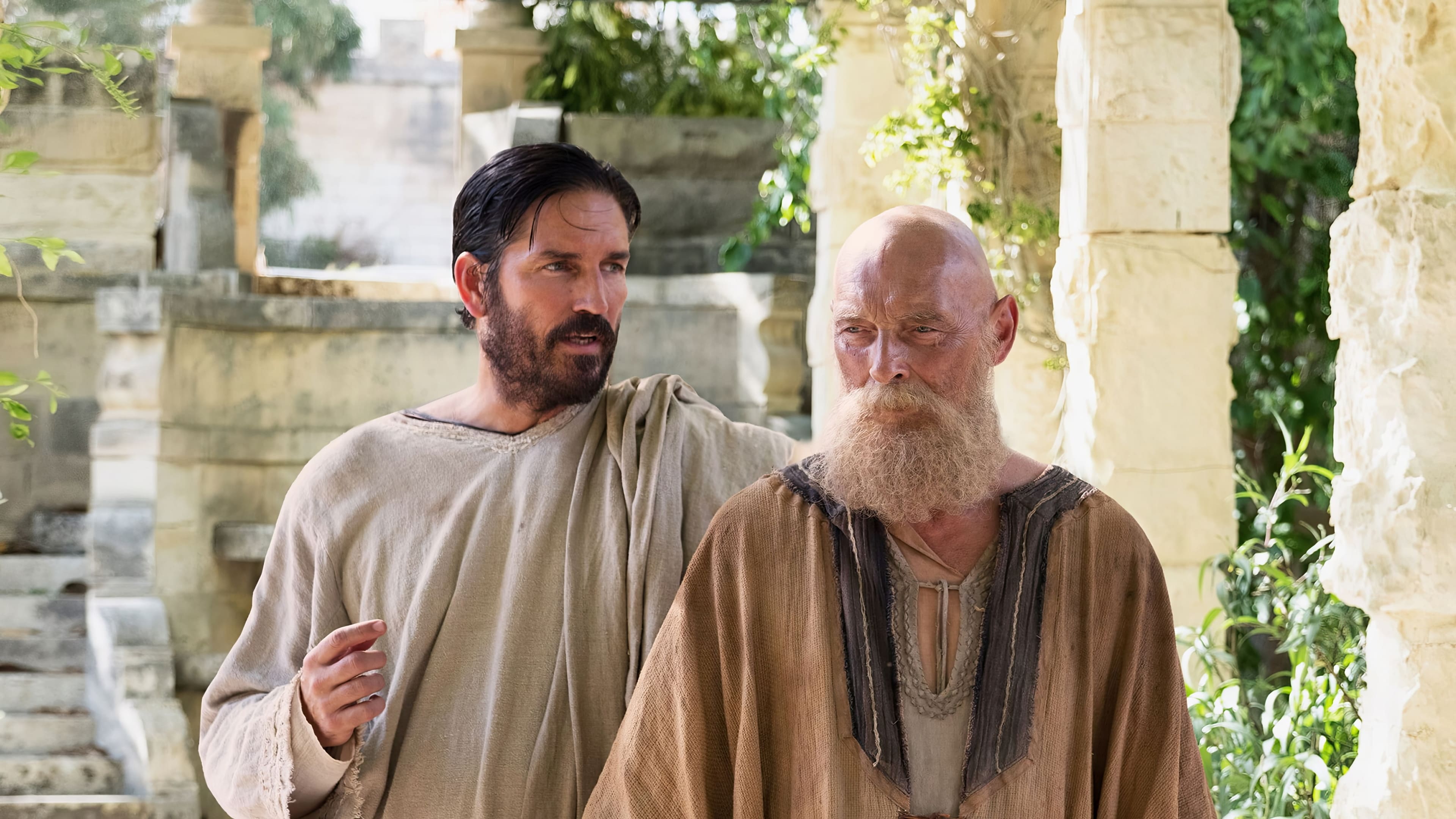
The movie depicts Luke (Jim Caviezel) visiting Paul (James Faulkner) in the rather well-lit "darkness" of his cell, where the two commit the Acts to paper. Why? According to Paul, "[Luke] believes people should know the certainties of my life."
This turns out to be quite an unwittingly ironical statement, considering that a) though the Gospel of L...

Filipe Manuel Neto
TMDB2 years ago
An excessively preachy film, aimed at more devout audiences.
It really costs being a historian when we feel like watching a film based on historical facts. We never manage to take off our academic attire and enjoy it, we see errors and inaccuracies where no one sees anything special. And this is tiring. When the film has a biblical theme, things tend to get worse. And what we have here is one of the weakest biblical films I've seen in a long time.
Based on solid material extracted from Paul's letters and the book of the Acts of the Apostles, the film seeks to show us a little of Paul's life as a preacher and Christian leader, focusing on the events that followed to the burning of Rome in 64 AD, and showing the rest through episodic flashbacks. The film starts from the correct presumption that the majority of its public is aware of the events and knows who was Paul. And in fact it is difficult to imagine any well-informed Christian who do not recognize the decisive action of this leader: initially, he was a pagan and helped the Jews to persecute the Christians, whom they considered a schismatic sect of their faith. Later, he became one of the defining figures of the early period of the Christianity, and was fundamental in bringing it to other races and peoples, definitively separating Christians from Jews. Tradition tells us that he was killed in Rome shortly after the fire, which Emperor Nero attributed to the fanatical actions of the city's Christians.
The film is not bad, but it could have made a better effort to capture Paul's preaching and action among other leaders: there is no mention, for example, of his participation in the first ecumenical council. Nero does not appear, but we see Roman repression in vibrant and exaggerated colors: although Roman chroniclers provided colorful descriptions of the massacres of Christians, it is known that such reports were exaggerated and archeology has never confirmed such ferocity. It was also difficult for me...