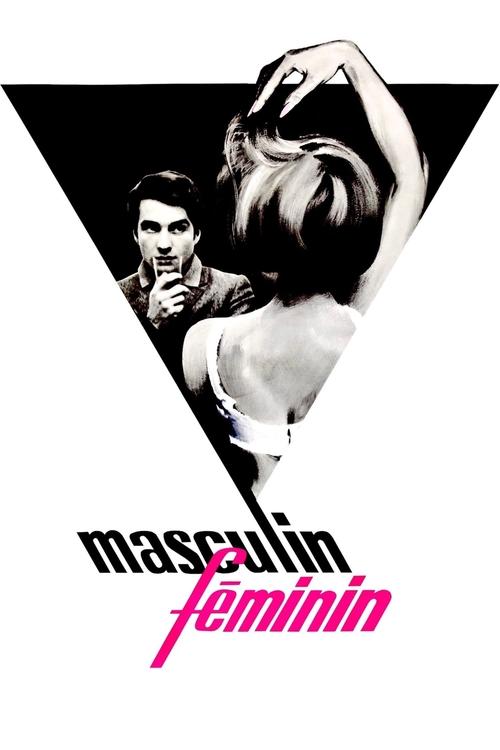
Masculin Féminin
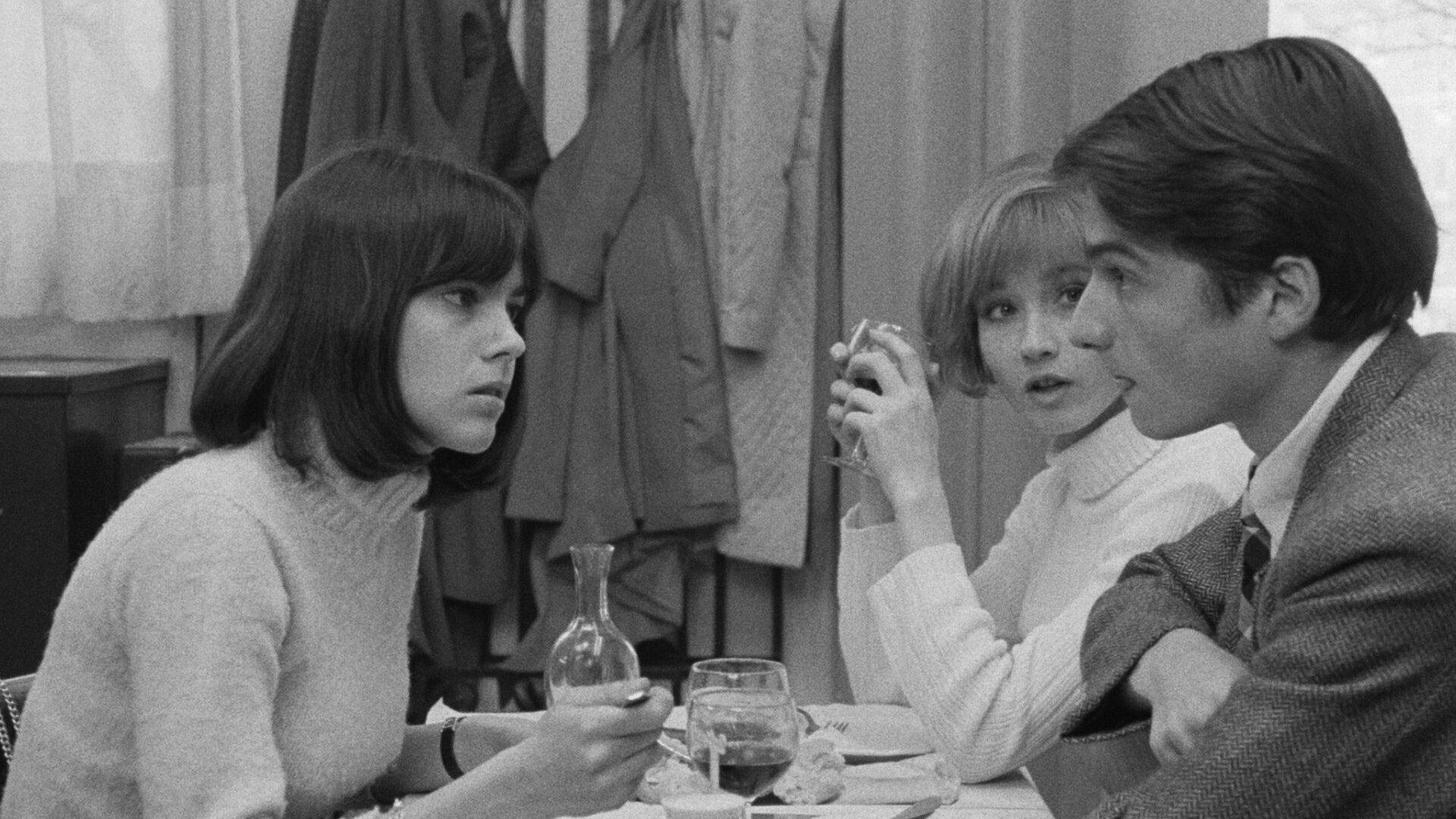
Paul, a young idealist trying to figure out what he wants to do with his life, takes a job interviewing people for a marketing research firm. He moves in with aspiring pop singer Madeleine. Paul, however, is disillusioned by the growing commercialism in society, while Madeleine just wants to be successful. The story is told in a series of 15 unrelated vignettes.
Trailers & Videos 1

Masculin Feminin (Trailer)
Cast

Jean-Pierre Léaud
Paul

Chantal Goya
Madeleine Zimmer

Marlène Jobert
Élisabeth Choquet
Michel Debord
Robert Packard

Catherine-Isabelle Duport
Catherine-Isabelle

Evabritt Strandberg
She (Woman in the Fi...

Birger Malmsten
He (Man in the Film)

Yves Afonso
Man Who Kills Himsel...
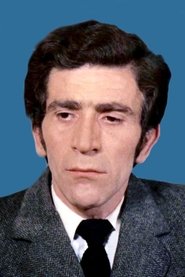
Henri Attal
The Other Porn Book...
Mickey Baker
Record Producer (unc...

Brigitte Bardot
Brigitte Bardot (unc...

Antoine Bourseiller
Brigitte Bardot's Di...
Ratings & Reviews
No community reviews yet. Be the first to share your thoughts!
TMDB Reviews
8 years ago
In MASCULIN FEMININ, shot in the autumn of 1965, Jean-Luc Godard studies the perennial features of courtship and dating between young men and young women, and the particular way they worked out in the newly permissive and economically booming society of 1960s France. Paul (Jean-Pierre Léaud) is 21 and has just finished his national service. In a café, he strikes up a conversation with Madeleine (Chantal Goya), a friend of a friend, with the pretext that she might help him find work. They start dating, and the film then tracks their rocky relationship, where Paul is frustrated as the sole man among Madeleine and her flatmates/girlfriends Elisabeth (Marlène Jobert) and Catherine-Isabelle (Catherine-Isabelle Duport). He occasionally meets up with his chum Robert (Michel Debord), just as young but already a passionate union activist.
But really, this is a lot more than a study in boy meets girl. Godard gives us a whole bucket of 1960s social, political, and cultural themes. Paul and Robert are both passionate members of the French Left, while the girls are more interested in the other side of the ideological divide, namely consumer society (pop music, clothes, cars). Their conversations reveal Godard's own unease at how the world was developing in the 1960s, his fears of political repression, dizzying technological progress, and a working class who had no time to enjoy all the stuff it could now buy. At several points in the film, the main characters overhear conversations in public places that are completely over-the-top in terms of sex and violence, but which reveal some of the tensions in society.
In fact, in one of the film's most striking scenes, Godard without warning has Leáud interview a real young woman (Elsa Leroy) who had recently won a fashion magazine's "girl of the year" award, asking her about politics, war, and what she wants from life. In this six-minute scene where only she is visible on camera, clearly put on the spot, she seems totally obliviou...