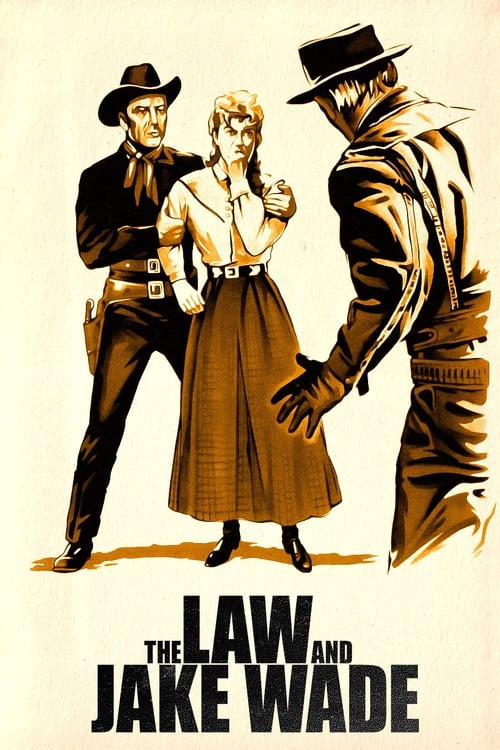
The Law and Jake Wade
Jake Wade breaks Clint Hollister out of jail to pay off an old debt, though it's clear there is some pretty deep hostility between them. They part, and Jake returns to his small-town marshal's job and his fiancée only to find he has been tracked there by Hollister. It seems they were once in a gang together and Jake knows where the proceeds of a bank hold-up are hidden. Hollister and his sidekicks make off into the hills, taking along the trussed-up marshal and his kidnapped bride-to-be to force the lawman to show them where the loot is.
Trailers & Videos 2
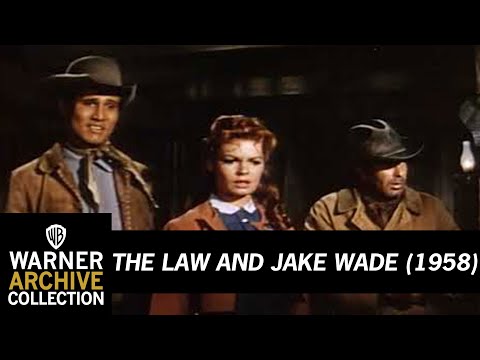
Trailer
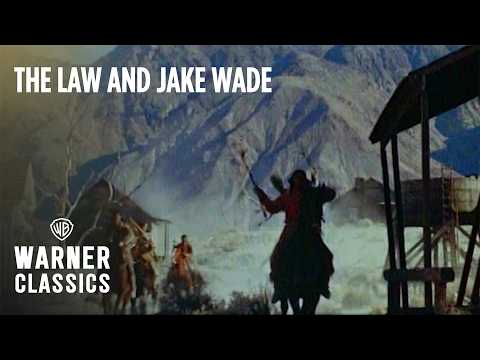
Comanche Warriors Attack
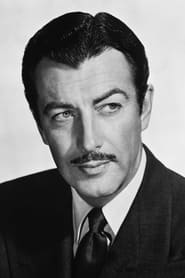
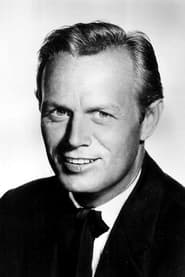
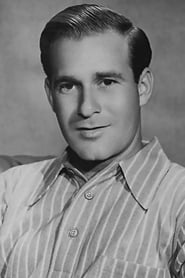
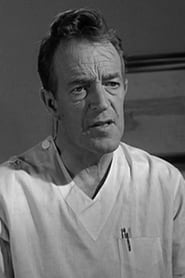
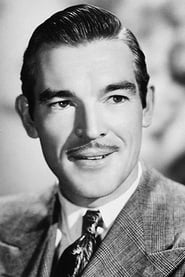
Cast

Ratings & Reviews
No community reviews yet. Be the first to share your thoughts!
TMDB Reviews

9 years ago
More than meets the eye in John Sturges' excellent Oater.
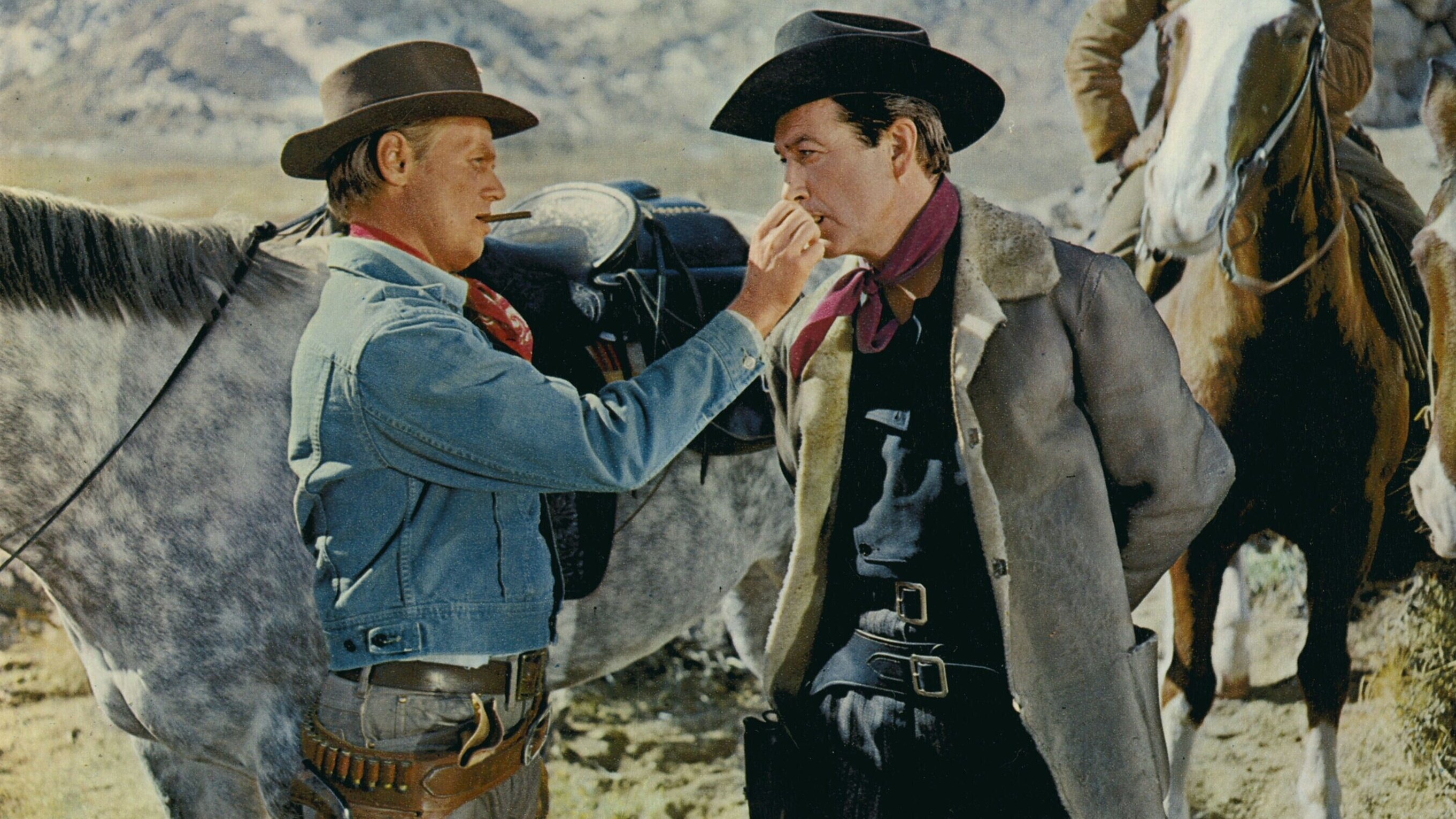
Jake Wade, a former thief and gunman is now the town marshal. Out of a need to clear a debt, he breaks a former accomplice of his, Clint Hollister, out of jail, and almost immediately starts to regret it. It seems that Wade hid some monetary spoils out in the hills and Hollister wants his hands on it. So along with his gang, Hollister forces Wade and his fiancée to go out searching for the cash. But not only is there conflict within the group, there is the small matter of the deadly Comanche to worry about as well.
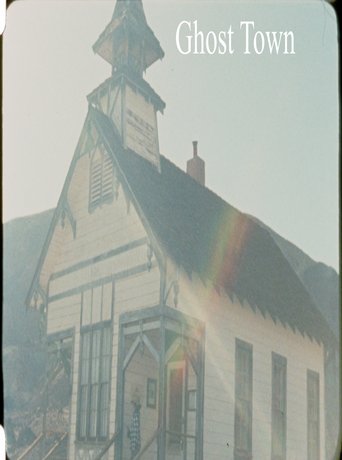
The Law And Jake Wade comes with some pretty solid Western credentials from the off. Directed by John Sturges (Gunfight at the O.K. Corral/The Magnificent Seven), starring Richard Widmark (Warlock/The Alamo), Robert Taylor (Saddle The Wind) and photographed by Robert Surtees (Oklahoma!/Escape from Fort Bravo). Widmark is on prime bad guy form as Hollister, and Taylor, who was often accused of being stiff, is perfect foil playing sedate off of Widmark's borderline evil. The cinematography is luscious from Surtees, both Death Valley and The Alabama Hills in California are as imposing as they are beautiful, with Sturges framing his blurry good vs bad characters amongst them to great effect. What action there is {this is primarily a talky picture in reality} is handled adroitly by the wily Stugess, with a Comanche attack on our protagonists in a ghost town, particularly exciting. It's very rare to see arrows and spears glide so gracefully on their path to pain as we do here, all crisply enveloped in MGM's choice of Metrocolor.
But really it's with the story itself that the film lifts its being to rank with the better genre offerings. William Bowers' screenplay, adapting from the Marvin H. Albert novel, on the surface looks like a standard good guy-bad guy dovetail piece, but things are purposely left unanswered to fully form the issues (yes you read it right). Is it for nothing that Wade, our...

4 years ago
"This town's not big enough for the both of us" (literally)
Released in 1958, "The Law and Jake Wade" stars Robert Taylor as the title character who was an outlaw after the Civil War, but is now a sheriff out West. A member of his former gang, Clint Hollister (Richard Widmark), won't let him start a new life and forces Jake and his fiancé (Patricia Owens) to lead him and a few other ne'er-do-wells to some buried money in a ghost town in the mountains. Unlike Jake, Clint is bad through and through and the new lawman is convinced he'll kill him after he gets the money.
This Western has a lot going for it: a solid cast, particularly Taylor as Wade and Widmark as the arrogant and no-good Clint (both are convincing Westerners); utterly breathtaking Western locations, shot in Alabama Hills , Lone Pine and Death Valley National Park, California; and some fascinating ruminations on the nature of morality, evil, law, friendship and rivalry.
As far as law goes, Clint argues that he killed and looted before and after the war, which society naturally considered evil, but he did the same thing during the war where the South viewed him as a faithful citizen. To him there's no difference, but Jake sees the difference in that the state of war may justify certain actions against enemies that aren't justified otherwise. Furthermore, Jake regrets his outlaw days whereas Clint has zero qualms about the evil that he wreaks.
Unfortunately, there are some problems on this front that are never answered. For instance, if Jake is now a "good man" and respects law and order (which explains the movie's title) why does he foolishly break Clint out of jail at the beginning of the movie? It's revealed that he's a man of honor who's paying back a debt, but – by doing this – he releases a serious criminal to continue to commit atrocities. He even admits that he's convinced that Clint will eventually murder him, which means he knows he's incorrigible.
Furthermore, in breaking Cl...