Perseus
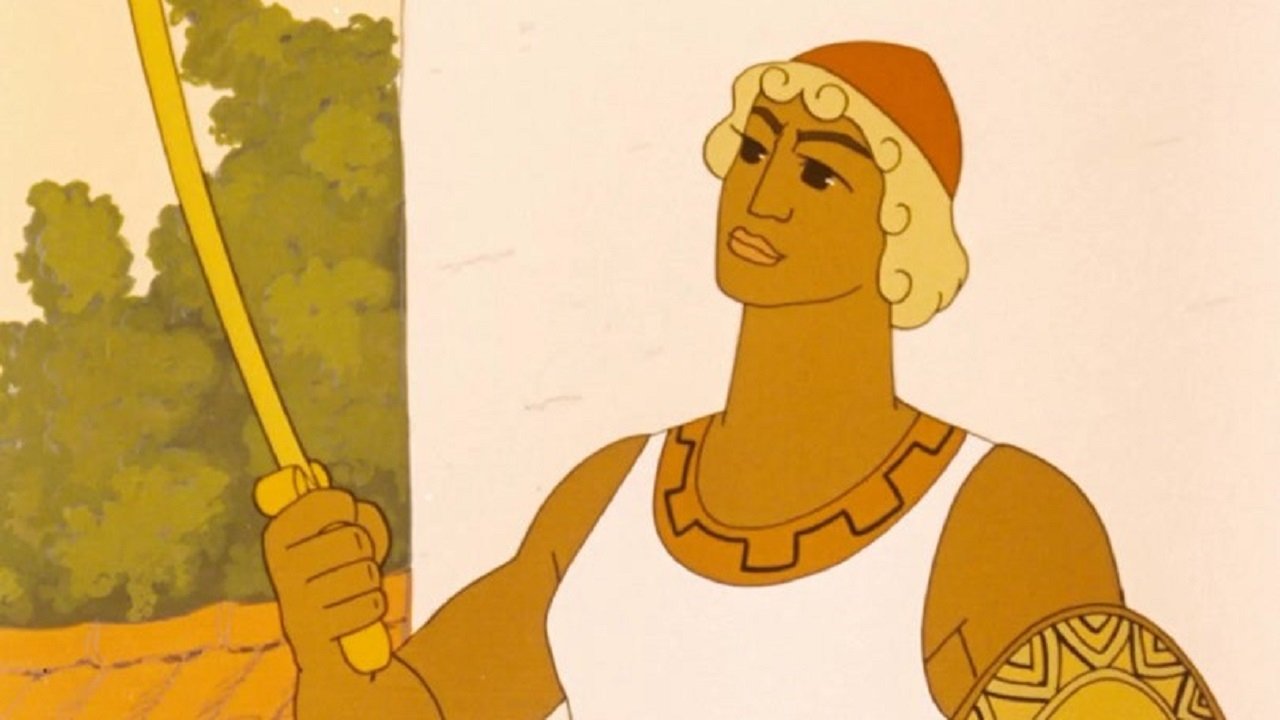
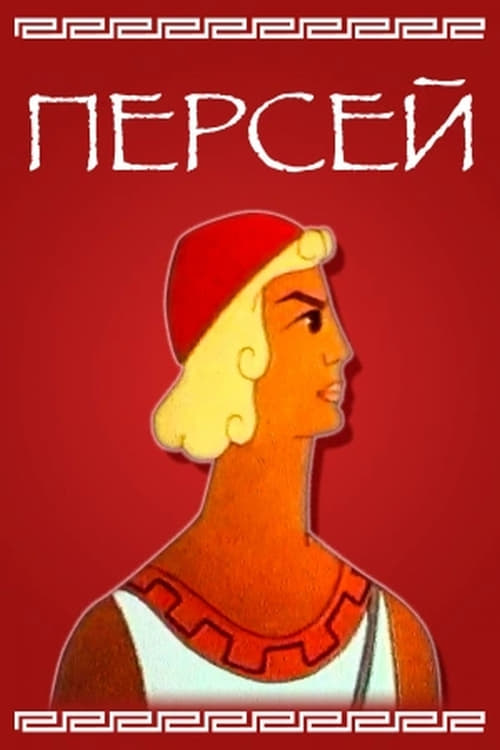
The cunning king Polidekt of the island of Serif sends the young hero Perseus to get the head of Gorgon Medusa, whose gaze turns people to stone. He is accompanied by the god of commerce and profits and the patron of thieves and athletes, Hermes, who pursues his personal interests. Perseus gets the head of Medusa, but uses it to save Andromeda, the daughter of King Kef.
Cast






Ratings & Reviews
No community reviews yet. Be the first to share your thoughts!
TMDB Reviews
5 months ago
The 1973 Soviet animated film Perses, directed by Aleksandra Snezhko-Blotskaya, is not historically accurate to ancient Greek mythology. Instead, it deliberately reshapes the myth into a moral allegory typical of Soviet educational animation, focusing on a conflict between altruism and greed.
The De-Divinization of the God: In the Aryan tradition, Hermes is a "Solar" messenger, the God of initiation, and a guide for the hero. The film's depiction of him as a cynical, profit-driven "merchant" who views kindness as a "commodity" would be seen as a Marxist/Semitic caricature.
The Attack on the Divine: The Soviet animators "projected" their hatred of capitalism onto a Greek deity to make the "Higher World" look like a den of traders. An Evolian would find this "plebeian materialism" unforgivable. The film's climax-where Hermes urges Perseus to use Medusa's head to become a "Master" and Perseus refuses-is a direct attack on the Leadership Principle.
The "Democratic" Hero: I would view Perseus' rejection of power as a "Slave-morality" trap. I would argue that a "True Aryan Hero" should use his power to establish order and hierarchy.
The Smear of Authority: By framing the suggestion of "Acknowledge him as your master" as something evil or cynical, the film teaches children to fear Authority and Strength. To me, this is "subversive propaganda" designed to make the Aryan race "meek" and "subservient" to the masses. Following Savitri Devi, I would argue that this film depicts a "Hero of the Kali Yuga"-one who has the blood of a god but the mind of a pacifist.
The "Savitri Devi" Perspective: The Kali Yuga Hero: I would conclude that the Soviet state produced this film to "lobotomize" the warrior-spirit of the Russian and Slavic people, turning them into "selfless workers" instead of "Aryan conquerors." I would view the ending-where Perseus chooses "love" and "altruism" over "power"-as a biological and spiritual failure. The movie's attempt to label Hermes a...