Trailers & Videos 1
November - Official U.S. Trailer - Oscilloscope La...
Cast








Ratings & Reviews
No community reviews yet. Be the first to share your thoughts!
TMDB Reviews
4 years ago
In the real world, magical thinking is a type of fallacy and a source of many superstitions, but in a film like November, it can be the difference between life and death, salvation and damnation. The characters in this Bergmanesque Estonian-German fairy tale, written and directed by Rainer Sarnet, live in a village surrounded by an honest-to-goodness Haunted Forest, although for them it would be weird if it weren’t haunted — to put it in perspective, pacts with the devil are so common that cunning villagers manage to fool the devil by using the sap of blackcurrants instead of blood to sign the contract.
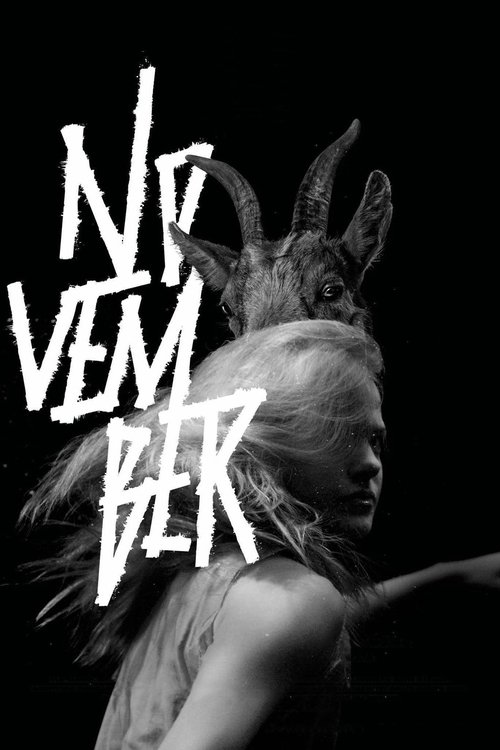
I find it curious that both All Movie and Wikipedia state that the movie is set in the 19th century, because it feels more like the Late Middle Ages, complete with the Plague. On the other hand, this is a world where almost anything is possible — cheating death as well as the devil; one of these clever villagers has a brilliant idea: “Take off your pants and put them on your head. The plague will think we have two butts and won't dare to touch us." We are tempted to poke fun at these ignorant peasants, but then the Plague, in the form of a white goat, does indeed pass them by harmlessly — at least for the time being.
The characters employ various other, for lack of a better term, 'lifehacks,' to survive the harsh winter; the most popular of these is the kratt, which in turn explains the frequency of pacts with the devil — the kratt, a magical creature in ancient Estonian mythology, is formed from hay or old household utensils, but needs to be imbued with a soul to carry out the orders of its master; the villagers summon the devil at a crossroads to make a deal: to buy a soul for their kratt in exchange for their own souls down the line.
The problem is that kratts are excessively 'gung ho', and capable of making an attempt on the lives of their owners if they do not provide them with something to do all the time; consequently, the kratt's master would ask t...

FolknHell
TMDB1 month ago
November opens with what appears to be a skeletal farm-machine monster bursting into a cowshed. It confronts a cow, hooks it up and then, rather than slaughtering it, flies away with it.
That is about as useful an introduction to Rainer Sarnet’s film as you could ask for. November spends much of its running time allowing you to decide what sort of thing you are looking at, then quietly informing you that you were wrong.
Its Estonian villagers live in spectacular poverty, surrounded by mud, livestock, hunger and the dead, yet supernatural events barely merit comment. Ancestors return for dinner. The Devil conducts business at crossroads. Lena can anoint herself and run as a wolf. Kratts, extraordinary creatures assembled from farm implements and whatever else happens to be lying around, are brought to life through deals for human souls. Magic is not an intrusion into this world. It is part of the household economy.
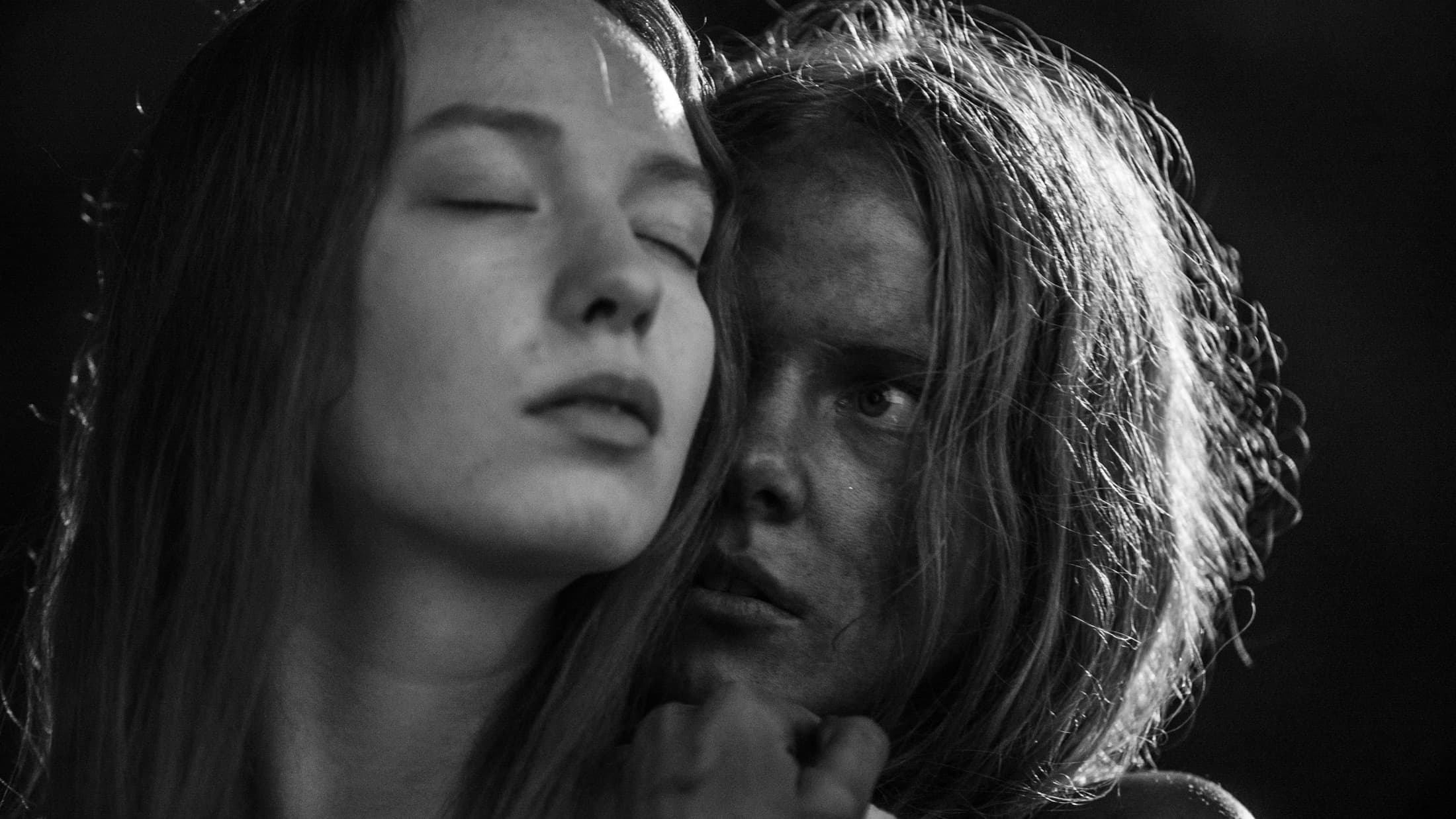
That matters because Sarnet shoots all this grotesquery in some of the most beautiful black and white photography imaginable. The contradiction never goes away. Toothless villagers wade through filth while forests become luminous, almost abstract spaces. A man surrounded by actual food confidently eats a bar of soap because he does not recognise the difference. It is horrible, funny and desperately sad at exactly the same time.
Running through all this is something unexpectedly simple: Lena loves Hans, Hans loves the Baron’s daughter, and nobody is getting what they want. The second viewing makes the trick clearer. What can initially feel like an avalanche of folklore is actually a remarkably coherent fairy tale, with that unhappy love story threading through plague, revenants, stolen property, enchanted machinery and one of cinema’s more personable incarnations of Satan.
Calling November horror almost undersells its peculiar achievement. It is rarely frightening. Even the Kratts can be strangely charming, right up until one has to man...