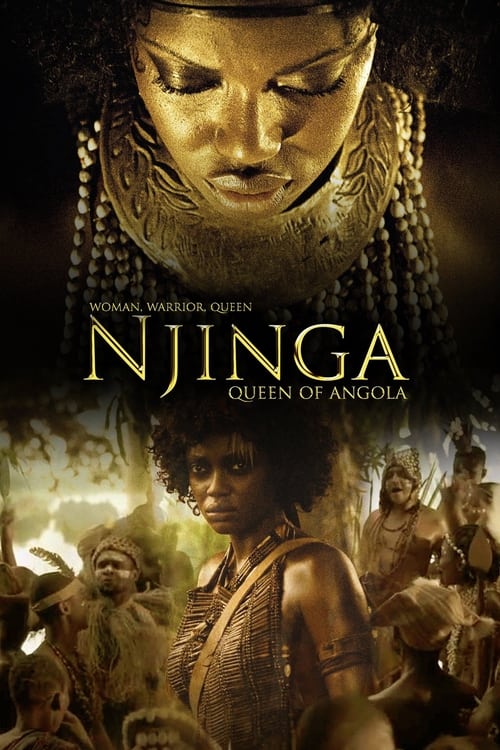
Nzinga, Queen of Angola
In the 17th century a warrior woman fights for the independence of Angola. After witnessing the murder of her son and watching her people being humiliated by Portuguese colonizers, Njinga will become a Queen and struggle for their liberation embodying the motto: those who stay fight to win.
Trailers & Videos 1

Njinga - Rainha de Angola trailer
Cast








Ratings & Reviews
No community reviews yet. Be the first to share your thoughts!
TMDB Reviews

Filipe Manuel Neto
TMDB2 years ago
Nzinga: the woman, the national leader, the mythological figure.
I saw this film yesterday, and I was reasonably satisfied. I don't think it's the first Angolan film I've seen, but it's certainly the first with some historical background. The film has flaws and will be uninteresting for anyone who is completely unaware of Angolan history, or the history of Portuguese presence in Africa. However, it is surprising due to its good production values and a certain rigor and objectivity in the way the story was told. There are flaws, the dialogues are very weak and melodramatic, but the film works.
Firstly, who was Nzinga? Well… she was an African stateswoman from the mid-17th century. One thing I liked seeing in the film was the complex relational mechanics between African tribal royalty, in every way the same as those that existed in European monarchies, with marriages and alliances between kings and tribal chiefs, struggles for power within a family, palace coups, betrayals and crimes. Nzinga grew up in this environment and had to learn to survive and to be as strong and fearsome as any man, feeling most capable of ruling and with the prior certainty that the traditions of her tribe would never allow her to do so. However, she did it! Always aiming to control power in the long term and ensure the survival of her family's kingdom, she acted intelligently and took advantage of the weaknesses and advantages she could. I believe we will never know to what extent Nzinga may have been Machiavellian: did she really kill members of her own family to secure power? It would not be the first time.
The film addresses, very well, tribal wars, rivalries between African kingdoms, the Portuguese threat to the independence of these kingdoms and the fluctuation of the Portuguese stance, which sometimes sought peace and sometimes sought war. However, there is one subject that the film does not seem to want to address in a very open and sincere way: the slave trade between th...