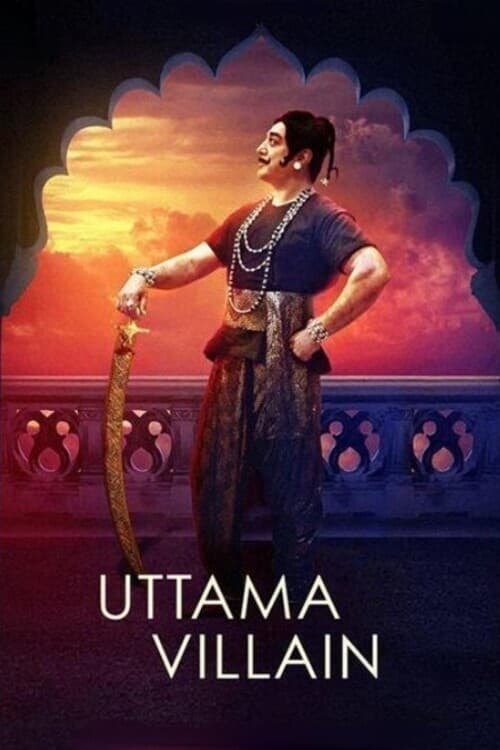
Uttama Villain
Superstar Manoranjan learns that he has only a few days to live and approaches his mentor, director Margadarisi to direct his next project — a folklore-ish comedy about a man who keeps cheating death and his role in saving a kingdom. Meanwhile, he has to sort out his personal lives, which involves an estranged son and a daughter from the love of his life.
Trailers & Videos 2

Uttama Villain Official Trailer #1 - I Kamal Haasa...

Uttama Villain - Teaser | Thirrupathi Brothers
Cast
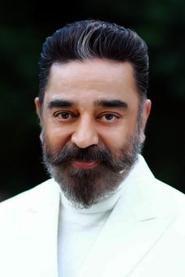
Kamal Haasan
Uttaman/Manoranjan
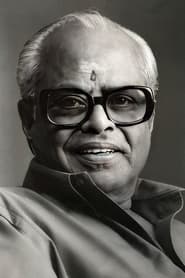
K. Balachander
Margadarsi

K. Viswanath
Poornachandra Rao

Andrea Jeremiah
Arpana

Jayaram
Jacob Zachariah

Nassar
Muttharasan

Urvashi
Varalakshmi

Pooja Kumar
Karpagavalli

Parvathy Thiruvothu
Manonmani
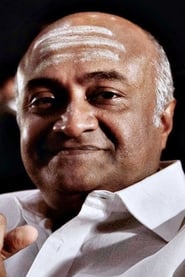
M. S. Bhaskar
Chokku Chettiar

Ashwin Arvind
Manohar

Shanmugarajan
Shanmugarajan
Ratings & Reviews
No community reviews yet. Be the first to share your thoughts!
TMDB Reviews
11 years ago
Uttama Villain is one of those films with a meta narrative where the line between the reel and the real becomes hard to distinguish. It stars Kamal Haasan as a superstar, Manoranjan, who goes back to his mentor Margadarisi (played by K Balachander, the real-life Margadarisi, who shaped Kamal's career) and asks him to direct him one last time after he learns that he has only a few days to live. This ticks off his father-in-law Poorna Chandra Rao, the producer who turned him into a superstar, and his wife Varalakshmi, who move out of the house with his son, not realizing the real reason behind his move. Manoranjan also learns that he has a grown-up daughter from Yamini, the love of his life, who he had to leave to marry Varalakshmi.
Meanwhile, in the film within the film, a period comedy titled Uttama Villain, Manoranjan plays Uttaman, a man (who is also an actor — a Theeyam artist) who is mistaken to be immortal, and a devious king, Mutharasan, believing the rumour, wants him to reveal the secret behind his immortality. But with time running out for Manoranjan, can he become immortal on screen?
Uttama Villain is first and foremost a glorious showcase for Kamal the writer. The script superbly blends subtlety with slapstick and the emotional moments never descend into full-blown melodrama. There are times when we get the feeling that Kamal is dipping into his own movie star life — the opening song Loveaa Loveaa seems to be his admission of acting in roles not suited to his age, pairing up with heroines half his age; when he seeks out Margadarisi, the director tells him he cannot make a story of the star that he is now; when he is consoling his son after revealing to him the illness, it is marred by fans who invade this deeply private moment. Such acute observations add texture to the scenes and make the characters more alive for us. The Uttaman portions are quite a contrast and serve chiefly function as a means to give a break to the heavily dramatic nature of...