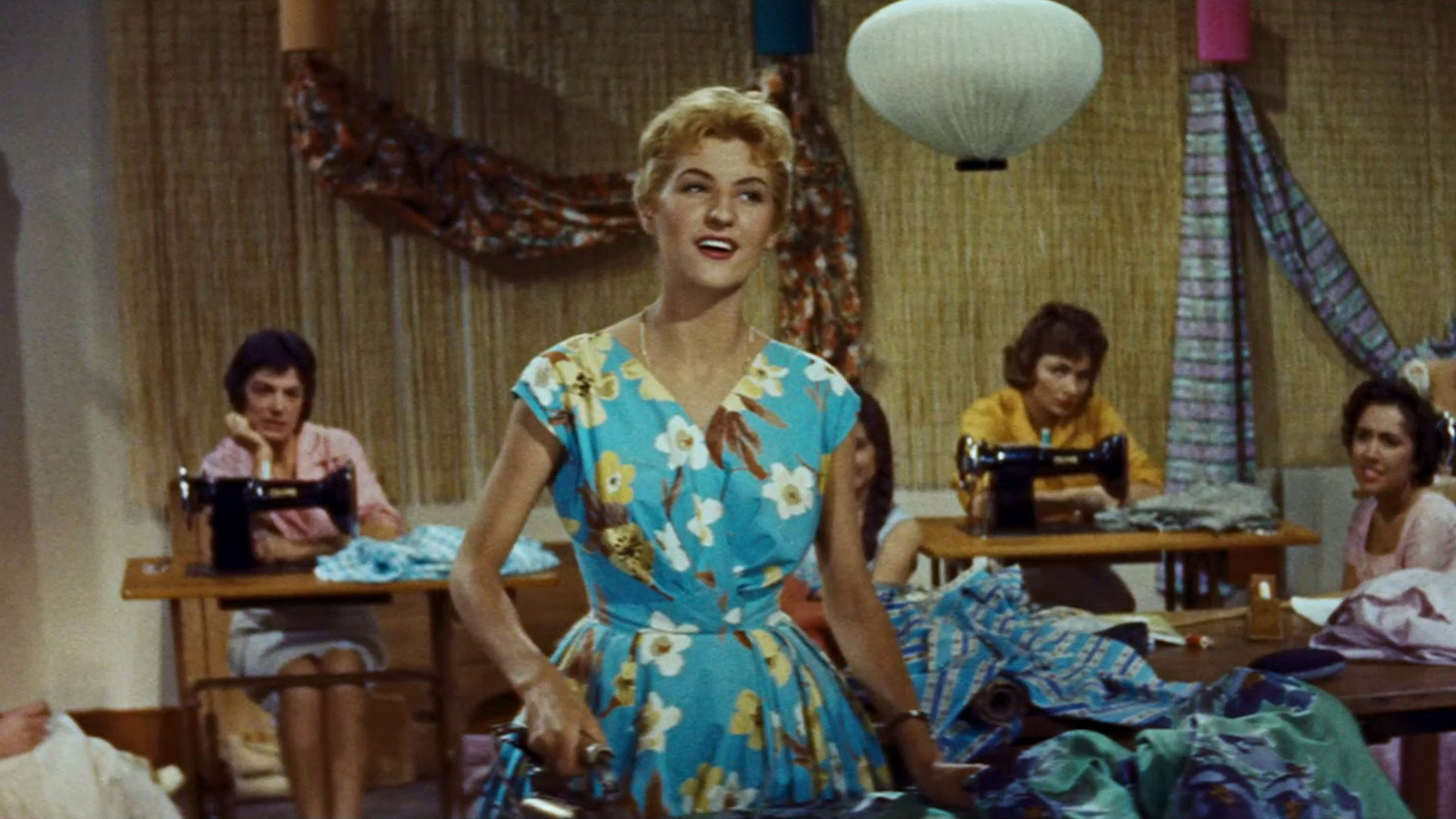

My Little Seamstress
Aurora is a modest young girl, working as dressmaker for the women her popular district, near the OPorto cathedral. One day, through a hintz-dress design competition, she gets involved with a haut couture atelier.
Cast






Ratings & Reviews
No community reviews yet. Be the first to share your thoughts!
TMDB Reviews

Filipe Manuel Neto
TMDB2 years ago
A film that left little mark, but shows the difficulties of making cinema under a dictatorship... and how beautiful Porto was before they ruined the city.
Portuguese cinema has a restricted range of great classics that everyone knows and that still continue to win audiences today, through regular screenings on RTP (the state radio and television group) and a certain “cult” status. “A Costureirinha da Sé” is not one of those films. It appears late, years after the “golden age” of cinema in Portugal, and seems strange due to the fact that it is a color film. In fact, as far as I could understand, this was one of the first Portuguese films in color. It is a step forward in the technical field, bringing to Portugal the colorization technologies that had already been in vogue for years in the USA, namely the “cinemascope”.
The film was created and directed by Manuel Guimarães, a filmmaker who until then drew his inspiration from Italian neo-realism. In close collaboration with Alves Redol, he had made several films in which he portrayed the prevailing poverty and backwardness of the country, such as “Nazaré” and “Vidas Sem Rumo”, and was punished by the censorship with merciless cuts that turned the films in an amorphous and incomprehensible soup, which would condemn them to box office failure. Let us not forget that, at this time, cinema was reviewed and censored by the authorities. It was because of this that, after several films documenting sporting events, Guimarães wanted to make this film, more naive and less ideologically charged, which was better received by the censors, but whose financing depended on the sponsorship of brands that inserted a lot of visible and irritating advertising.
Unfortunately for Manuel Guimarães, those who never understood this change in style and position were the Portuguese critics and academics, who seemed to have appreciated his initial stance. It's easy to criticize when you don't feel the difficulty of creating culture...