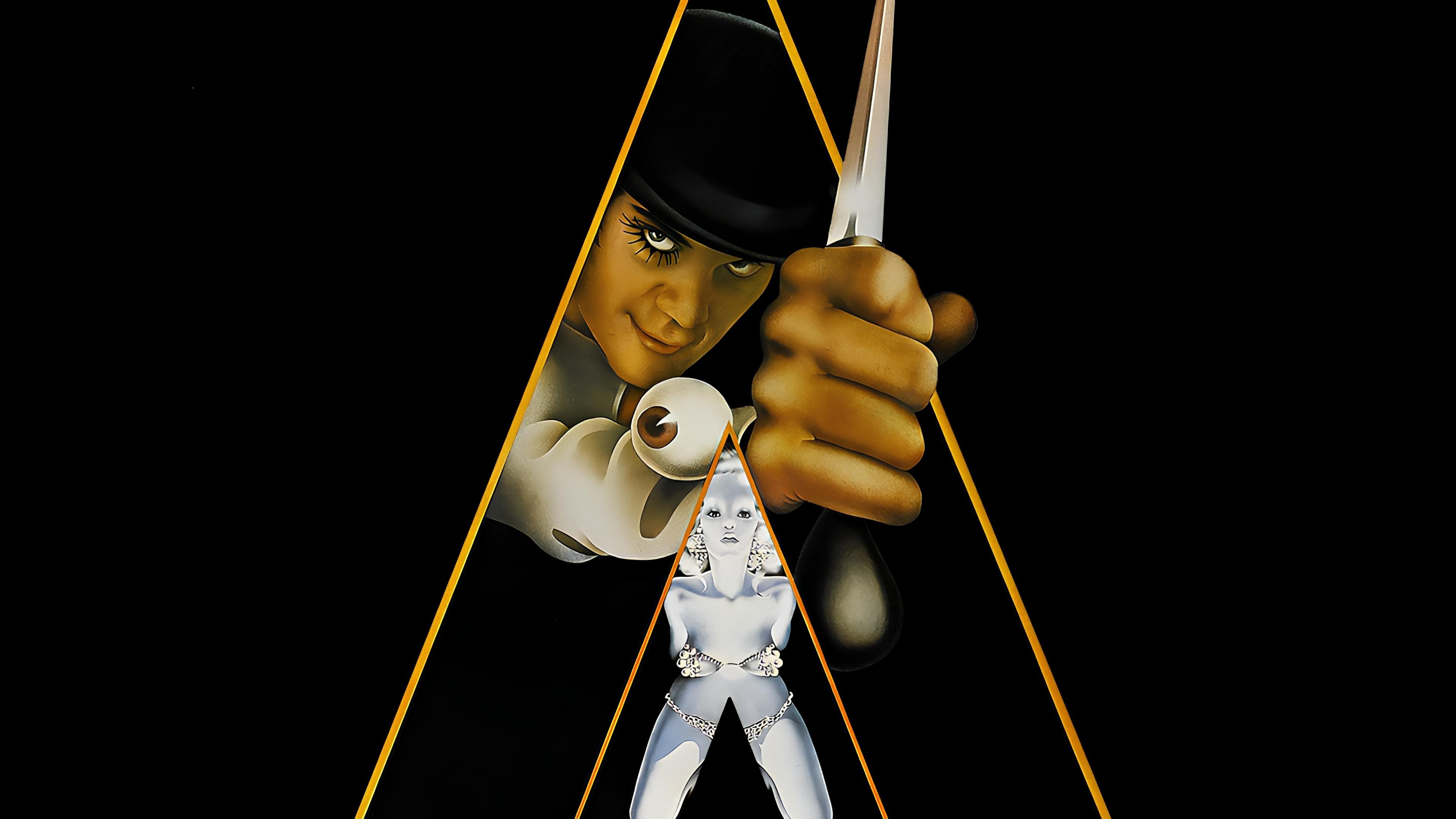
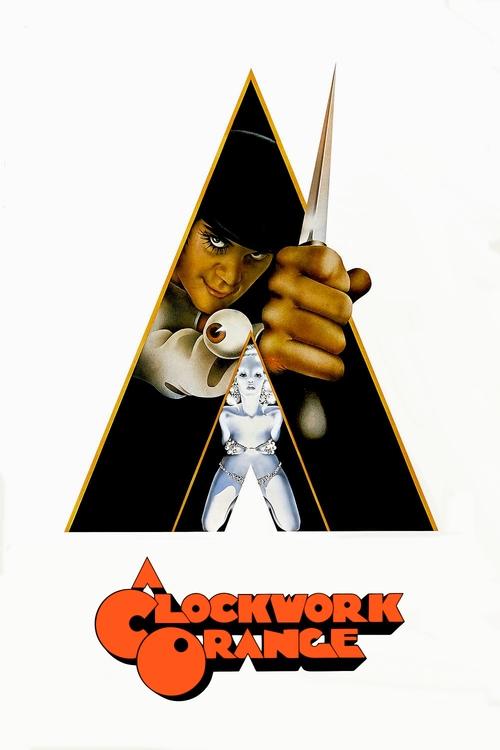
A Clockwork Orange
In a near-future Britain, young Alexander DeLarge and his pals get their kicks beating and raping anyone they please. When not destroying the lives of others, Alex swoons to the music of Beethoven. The state, eager to crack down on juvenile crime, gives an incarcerated Alex the option to undergo an invasive procedure that'll rob him of all personal agency. In a time when conscience is a commodity, can Alex change his tune?
Trailers & Videos 6
Original Trailer
Trailer
UK Re-release Trailer
Masterpiece Trailer
Minister Offers Alex a Deal
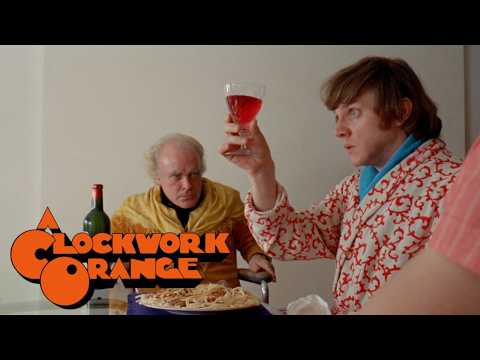
Try the Wine!
Cast







Ratings & Reviews
No community reviews yet. Be the first to share your thoughts!
TMDB Reviews
10 years ago
As time goes by, I'll always appreciate my Grade 10 English class (1984-85), taught by Mr. Terry. Looking back, it's probably the year that I was introduced to the most great literary works of all my life (especially 'Anthem' by Ayn Rand and 'Nausea' by Jean-Paul Sartre). Included that year in the course's curriculum was Anthony Burgess' dystopian masterwork, 'A Clockwork Orange' (as well as George Orwell's 'Animal Farm'--like Frank Sinatra would have said, 'It was a very good year'). I was mesmerized with it from the instant I noticed the unique approach to language, the 'ultraviolence' and of course, the eternal question of free will, its relationship to good-and-evil, and the can of worms of the myriad of ethical dilemmas that comes to the fore of individual freedom and rights versus that of society at large. The genius of Burgess was being able to put so well and forcibly, yet in such an entertaining way, so many issues that, had most anyone else set forth on the endeavor, would have come up with the type of off-putting, heavy-handed sermon that would never have reached such a literary pinnacle, and been required reading even now, generations later. It hasn't aged or dated a day.
Most cinematic observers felt the book unfilmable. Director Kubrick's adaptations work so well, particularly this, '2001: A Space Odyssey' and 'The Shining' (even though Stephen King would fervently disagree about the latter) because he, as he did with 'Dr. Strangelove', can so easily both find unforgettable visual metaphors for his ideas and so handily combine humour (an under-recognized trait of his, much more readily associated with say, Sir Alfred Hitchcock) with these heavy and daunting philosophical and intellectual volleys. In the wrong hands (particularly a Stanley Kramer, or his ilk), this could have failed miserably, like typical cinematic treatments of Ayn Rand novels. But this worked triumphantly, and heartily exemplifies one of the greatest directors ever at the apex of...

5 years ago
Some great visuals and direction not to mention an incredible performance from Malcolm McDowell, I wasn't totally into this, the first half especially was taxing to get through to the point I stopped watching and only finished a couple days later. The rest was good and found myself a bit more engaged however as a whole, this one never grabbed me. 3.5/5

Sigeki Ogino
TMDB3 years ago
With this film, a world heritage of cinema, Stanley Kubrick has reached a level of artistic mastery that would make Michelangelo pale in comparison. To make a film an art form, it must have the innovation of a Chaplin or Jean-Luc Godard. Furthermore, for a film to be a masterpiece, it must have music, direction, and great performances by the cast. Nevertheless, this film easily fulfills these requirements, and miraculously, it is a perfect work of art, with outstandingly high quality visual beauty far above the audience. For 136 minutes, one feels as if one has stepped into an exhibition of paintings or photographs that are sigh-inducingly vivid, beautiful, sometimes violent, and sometimes insane. The film's elaborate camerawork is erotic, but not vulgar, like a sensual film. The clarity of vision, both pictorial and photographic, is unparalleled. Any of the scenes, even the still ones, would make a grade-A photo book. Without a doubt, it is the best film made in the entire world in 1971. It deserves to be the "Pietà" of the film world.

CinemaSerf
TMDB3 years ago
This is a truly challenging film that routinely glorifies violence - especially towards women, and offers us a terrifying appraisal of the effects of unfettered government and science working in cahoots with each other. Fifty years on from it's groundbreaking release, it's great to watch this on a big screen again - and though the imagery is much less potent that it was in 1971, the performance from Malcolm McDowell is scarily compelling. The plot centres around him and his three sadistic cohorts who live a disparate life terrorising wherever they roam until finally they go a little too far and he is apprehended. A fourteen year sentence is handed down but after two of them, he seeks enrolment in a controversial, experimental, aversion therapy scheme the results of which don't quite deliver as expected. The film presents us with some some pretty gruesome worst-case scenarios to start with, those serve to exaggerate the threat to normal livelihoods and thus lend credibility to the even more daunting prospect of the clinical conditioning of people. In this case, it is specifically the conditioning of one violent individual, but it's very easy to extend the principle to those with whom the government, or state, might disagree - and Kubrick lays that threat bare for all to see and evaluate. I struggled a bit with the nonsense language at times, it seemed puerile and prone to ridicule, certainly to detract from, the more thought-provoking elements of the plot. Perhaps it is there to serve as steam-valve for the intensity of the subject matter, but I am not convinced it is effective or necessary. The book allows us scope to use our own imagination as to the terror this whole concept could invoke, but as film adaptations go, this one offers us a great and innovative template for any interpretation, and coupled with the powerful use of a classical music score - including Ludwig Van, of course, and a solid supporting cast contributing well, this is a truly momentous piece of...
3 years ago
The film is based on Anthony Burgess‘ novel about young Alex Delarge and his droogs who go around tolchocking people and partaking of the ultraviolence and the old in-out-in-out.
Yes, the language is a futuristic mix of Russian, slang and made-up words that Burgess employed so that the futuristic language employed would never sound dated. He called it Nadsat. By the end of the film, for better or worse, you will understand the language.
Note: This may be too detailed for those who have not seen the film, so I advise reading it after a viewing.
Alex likes violence, sex, and Beethoven. He is the leader of a gang (droogs) and in the first part of the film we witness a typical evening: beating up an old veck (derelict, tramp); breaking into the house of a writer and beating him up and forcing him to witness the rape of his wife (in the book it is this writer who coins the term “A Clockwork Orange”), then heading back to the Korova Milkbar.
We are shown Alex’s home: his parents are a rather dull and passive pair. Alex’s bedroom has all the mod-cons, including a pet snake! He also has a state-of-the-art hi-fi on which he listens to his favourite piece of music – Beethoven’s Ninth.
There is dissent in his group’s ranks, to which Alex reacts with violence. However, having asserted his leadership Alex and his droogs go on another evening’s rampage. Alex kills a woman in her house, but is locked in by his vindictive droogs. He is caught and sentenced to 14 years. Two years later, the current Government has promised to do something about the gross prison overcrowding so they employ a new technique that makes the offender feel ill when confronted with violent feelings (the Ludivico Technique). Alex volunteers for the treatment because he will get released after two weeks.
After the two weeks of receiving the treatment we witness a debasing example of its efficacy conducted in front of his old prison warders and chaplain – who is opposed to the treatment on...

1 month ago
A Clockwork Orange was garbage to me: a smug, ugly film that mistakes shock value for depth. It spends so much time glamorizing Alex’s cruelty that its supposed message about violence, free will, and state control feels muddled rather than meaningful.
Yes, the movie is visually distinctive, and Malcolm McDowell is committed, but neither made the experience enjoyable. The artificial slang, cold characters, and endless stretches of stylized nastiness made it feel more exhausting than provocative. By the end, I wasn’t impressed by its boldness—I was just relieved it was over. Critiques of the film have similarly argued that its stance is ideologically confused and that it can seem more interested in its protagonist’s cruelty than in condemning it.