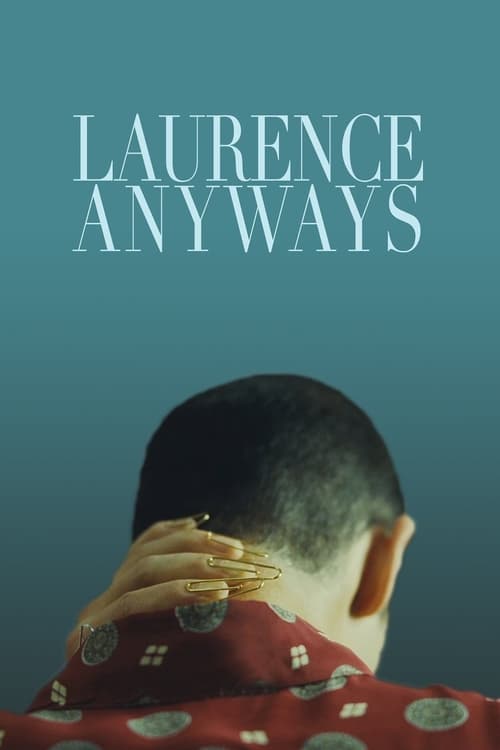
Trailers & Videos 3
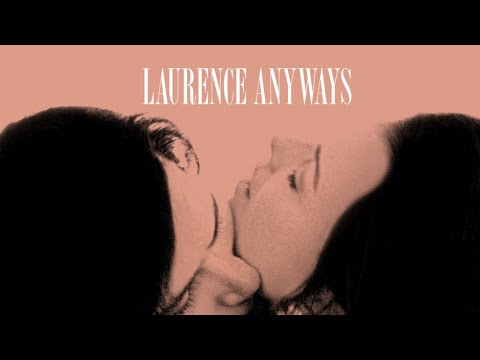
Official Trailer

Trailer
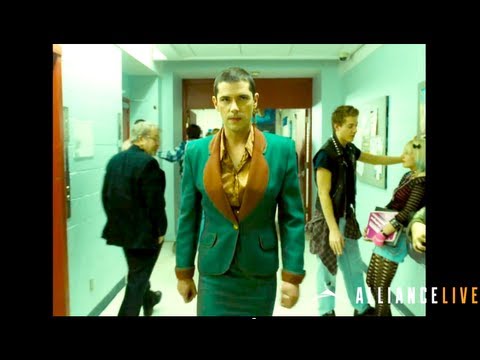
TIFF 2012 Red Carpet
Cast

Melvil Poupaud
Laurence Alia

Suzanne Clément
Fred Bellair

Nathalie Baye
Julienne Alia

Monia Chokri
Stéfanie Bellair

Susan Almgren
Journalist

Yves Jacques
Michel Lafortune

Sophie Faucher
Andrée Bellair

Magalie Lépine-Blondeau
Charlotte

Catherine Bégin
Mamy Rose

Emmanuel Schwartz
Baby Rose

Jacques Lavallée
Dada Rose

Perrette Souplex
Tatie Rose
Ratings & Reviews
No community reviews yet. Be the first to share your thoughts!
TMDB Reviews
4 years ago
It would be wrong to call this "just another TG movie." It's an intense love story, told in a throwback avant-garde style, which is pretty impressive. I enjoyed both the art that was intended to reflect the lives of two artists, as well as the story.

CinemaSerf
TMDB2 years ago
Xavier Dolan pretty much tries to rewrite the gender identity book with this overly long, but quite potent look at the life of "Laurence" (Melvil Poupaud). He is a pretty discontented man who announces to his long term girlfriend "Fred" (Suzanne Clément) that he is deeply unhappy in his own skin, and that he feels he would be much more fulfilled as a person if her were to be a woman. She's a bit taken aback, there are the "is it me?' conversations and then the realism sets in for her. That realism is even more difficult for his parents. His father, well he takes a slightly more stereotypically rejectionist perspective but his mother (Nathalie Baye) has a far harder time reconciling his choices. Though in response to his "Will you still love me", she comes out with "Are you becoming a woman or an idiot?", you sense that her world is in just as much turmoil as that of her son who now wishes to be her daughter. With the family stresses bubbling away, he starts to dress more freely and that attracts comments at work. He's a literature lecturer - perhaps a vocation that might provide for an atmosphere of tolerance and alternatives? Well, no - not quite, and pretty soon he is without a traditional form of anchor in his life, but no less determined. The story is set across a ten year period during which "Laurence" moves towards realigning his sex and dealing with the consequences for him and those around him. Poupaud is really quite effective at illustrating the peaks and troughs of his new life, of the days of joy and empowerment tempered with those of depression and isolation. Baye also delivers strongly as a woman conflicted and not at all certain of what is best for her child - and there is something plausible about her behaviour. Then there's Bellair's effort as his lover. That doesn't work quite so well for me, but maybe that's because I felt the behaviour written for her character just didn't resonate with realistically very often. It is over-written. There is way t...

FrameFatale
TMDB2 months ago
I know people in this category pretty well, so I went into this film with some already strong feelings. I’m going to be fairly critical of this film despite being a really well shot and crafted and even a film I enjoyed enough.
One criticism I have of Laurence Anyways is that, despite its reputation as a film about gender dysphoria, it spends surprisingly little time exploring dysphoria itself. Instead, its focus is on the consequences of coming out and non-conforming, the effects on relationships, family, work, and identity as seen from the outside. Laurence’s motivations remain largely implicit, and the audience is asked to accept them rather than understand them. The recurring phrase “born in the wrong body” functions more as a narrative premise than an idea the film meaningfully examines. Whether one agrees with that phrase or not, it carries profound psychological and philosophical implications that the film leaves unexplored. As a result, Laurence Anyways succeeds as a meditation on love, change, and social upheaval, but is less convincing as an exploration of the internal experience that precedes transition.
I appreciate that Laurence isn't portrayed as a villain, a hero, or a caricature. The film allows Laurence to be contradictory, selfish at times, loving at times, confused, hopeful, and deeply human.
The film leans heavily into the idea of identity without exploring why someone like Laurence develops that profound need in the first place. Laurence Anyways avoids being overtly ideological, but because it stays almost entirely hidden in Laurence's subjective experience, it also doesn't leave much room to ask difficult questions about different developmental pathways or why different people arrive at transition for different reasons. That's okay. but I felt like it missed an opportunity for viewers to be drawn in, but merely passive observers.
Another aspect that felt underdeveloped was Laurence’s transition itself. Despite spanning nearly...