Seven Veils
Jeanine, an earnest theatre director, has been given the task of remounting her former mentor’s most famous work, the opera Salome. Haunted by dark and disturbing memories from her past, she allows her repressed trauma to color the present as she re-enters the opera world after so many years away.
Trailers & Videos 5

Official Trailer
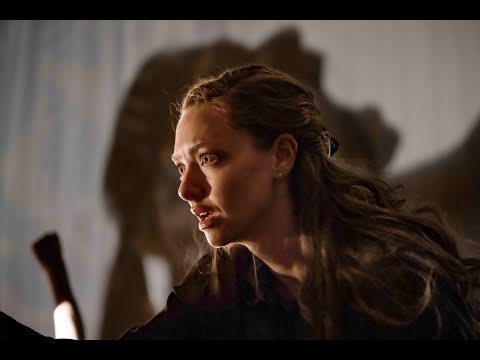
US Trailer

Amanda Seyfried & Atom Egoyan: “Why can’t every mo...
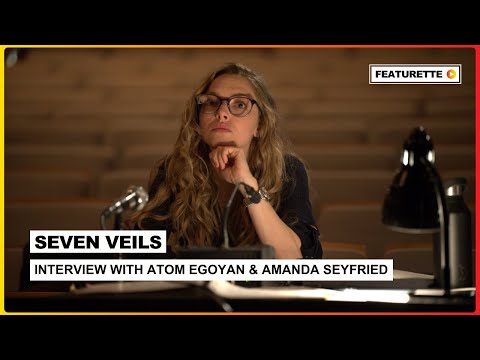
Interview with Atom Egoyan and Amanda Seyfried

TIFF 2023 Q&A with Atom Egoyan
Cast










Ratings & Reviews
No community reviews yet. Be the first to share your thoughts!
TMDB Reviews
Brent Marchant
TMDB1 year ago
Author/poet/playwright Oscar Wilde is widely renowned for his observation that “Life imitates art” (or, more precisely, as the full quote maintains, that “Life imitates art far more often than art imitates life”). But is that statement indeed true? In many ways, it seems that both propositions are just about equally valid these days. And that’s a pervasive theme – from both perspectives – that runs through the latest feature from writer-director Atom Egoyan. The film tells the story of a theatrical director (Amanda Seyfried) who takes on the challenge of mounting a new production of the Richard Strauss opera Salome (a work ironically based on an Oscar Wilde play of the same name), a revival based on a previous version staged by her former mentor and now-deceased unrequited love. The opera, in turn, serves up a musical interpretation of the Biblical tale of prophet John the Baptist (Michael Kupfer-Radecky) and Judean Princess Salome (Ambur Braid), perhaps best known for her erotically charged “Dance of the Seven Veils” and who asks her stepfather, King Herod (Michael Schade), to present her with the holy man’s head on a silver platter when he spurns her romantic advances. Ironically, the director’s personal story uncannily parallels that of the operatic subject matter she’s now in the process of staging, presenting her, as well as many other members of her cast and production team, with an opportunity to examine themselves, their circumstances and the ghosts of their long-ignored pasts. In a sense, this scenario thus provides all concerned with a chance to work through their respective long-unresolved (and often-interrelated) issues, a de facto form of art therapy not unlike that explored in films like “Black Swan” (2010). Unfortunately, the narrative is overloaded with story threads and at times becomes a little too intricate and cumbersome for its own good. What’s more, after a while, the myriad connections linking these various subplots start to seem a tad conveni...