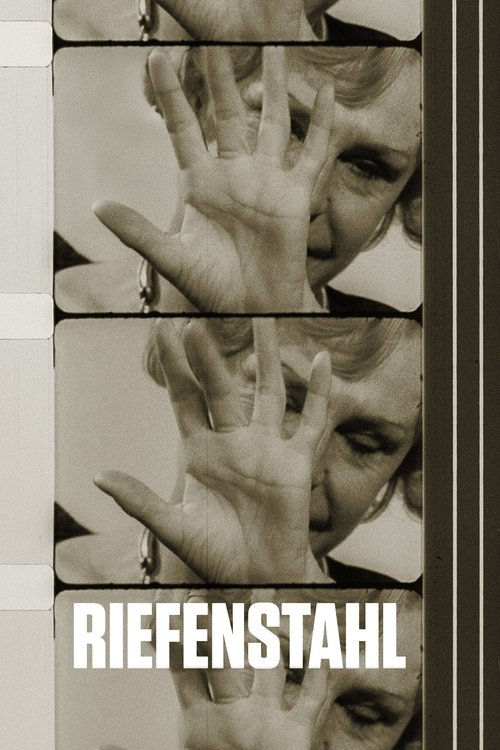
Riefenstahl
Explores Leni Riefenstahl's artistic legacy and her complex ties to the Nazi regime, juxtaposing her self-portrayal with evidence suggesting awareness of the regime's atrocities.
Trailers & Videos 2
Official Trailer
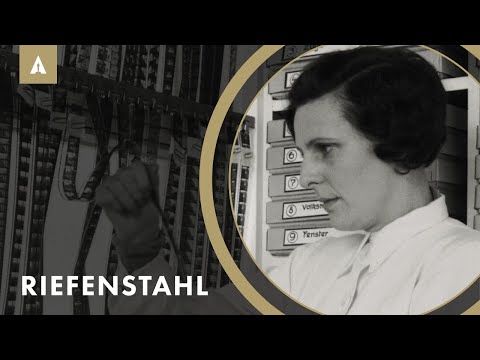
New Doc 'Riefenstahl' Examines the Life and Lies o...
Cast

Leni Riefenstahl
Self (archive footag...
Horst Kettner
Self (archive footag...
Adolf Hitler
Self (archive footag...
Joseph Goebbels
Self (archive footag...
Albert Speer
Self (archive footag...
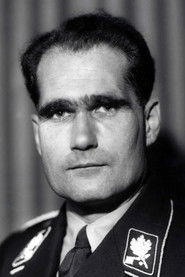
Rudolf Hess
Self (archive footag...

Hansjürgen Rosenbauer
Self (archive footag...
Elfriede Kretschmer
Self (archive footag...
Ratings & Reviews
No community reviews yet. Be the first to share your thoughts!
TMDB Reviews
Simon Foster
TMDB1 year ago
"Understated, allowing the oft-vilified filmmaker a strong voice (via masterfully curated archival people) that echoes denial, defence and defiance. It is ultimately entirely clear which side of the discussion Veiel favours, but his argument is never not balanced and meticulous..."
Read the full review here: http://www.screen-space.net/reviews/2025/5/7/riefenstahl.html
Brent Marchant
TMDB10 months ago
“To thine own self be true” – it’s an admonition and affirmation generally held in high regard, but it’s also one that can be difficult to live up to. In many instances, that’s attributable to not really knowing oneself in the first place. And, as this telling documentary from writer-director Andres Veiel reveals, that was very much the case where German filmmaker Leni Riefenstahl (1902-2003) was concerned. At the risk of profound understatement, this colorful, controversial yet innovatively brilliant German-born actor-producer-director lived what could best be termed “a complicated life.” As an impassioned devotee of the arts, she developed a stellar reputation for her work as an actress and filmmaker in such pictures as director Arnold Fanck’s “Storm Over Mont Blanc” (“Stürme über dem Mont Blanc”) (1930) and her own directorial debut, “The Blue Light” (“Das blaue Licht – Eine Berglegende aus den Dolomiten”) (1932). Her considerable talents, in turn, caught the attention of the leaders of the country’s emerging National Socialist (i.e., Nazi) Party, who were looking for someone to serve as a creator of propaganda films (even if they weren’t officially called as much at the time). Riefenstahl was thus recruited to direct documentaries about the landmark Nuremberg Nazi Rally, “Triumph of the Will” (1935), and “Olympia” (1938), a two-part production celebrating the glories of the Third Reich at the 1936 Berlin Olympiade. Through these works, the filmmaker significantly advanced her reputation as a documentary filmmaker, introducing never-before-seen innovations in cinematography. She relished these opportunities to showcase her capabilities, but it came at a price when the truth of Nazi atrocities emerged during World War II – incidents about which she claimed to have no knowledge until she began witnessing them firsthand as a documentary war correspondent in Poland in 1939. Disillusionment subsequently set in. But, when she was accused of actively helping to sanction...

CinemaSerf
TMDB8 months ago
Barring her being given a decent dose of Scopalamine, it was highly unlikely that Leni Riefenstahl was ever going to acknowledge in any interviews the extent of any complicity she may have had in the Holocaust - either actively or passively, but this documentary uses an astonishing collection of archive, much of it her own, to try to piece together something of the life of this visionary and enigmatic filmmaker. Using images from her own on-screen roles there is something of the Garbo to her beauty and it’s not hard to see why she captured the eyes and reputedly the ardours of people like propaganda master Josef Goebbels. It seems, though, that the Führer himself understood the value of her creative eye and pretty swiftly she is at the top table of the Reich. With the war starting, though, she is required to turn her more artistic talents more to those extolling the Nazi war machine and this is where issues around the gassing and incinerations of the millions starts to become more of a focus of this challenge to her own version of events. Now given the subject matter and the huge amount of material available, I have to admit that I was a bit disappointed by the structure of this. It’s a bit all over the place and lacks the cohesion a guide narration might have provided. There is simply too much here for us to sift through, much of it contradictory, and with such a vast collection of papers, reports and investigations for us to consider some distillation would have been useful. On the aesthetics front, though, the imagery of the discobuli-style athletes demonstrating the epitome of the Arian race - lithe, handsome and physically perfect is hard to dispute in terms of it’s effectiveness on a population desperate for hope. Philosophically, hindsight makes judgements a lot more black and white than the situation was at the time, and as she puts it herself, nobody wanted to argue with Hitler at the start and nobody dared afterwards - and I think this does give us an inkl...