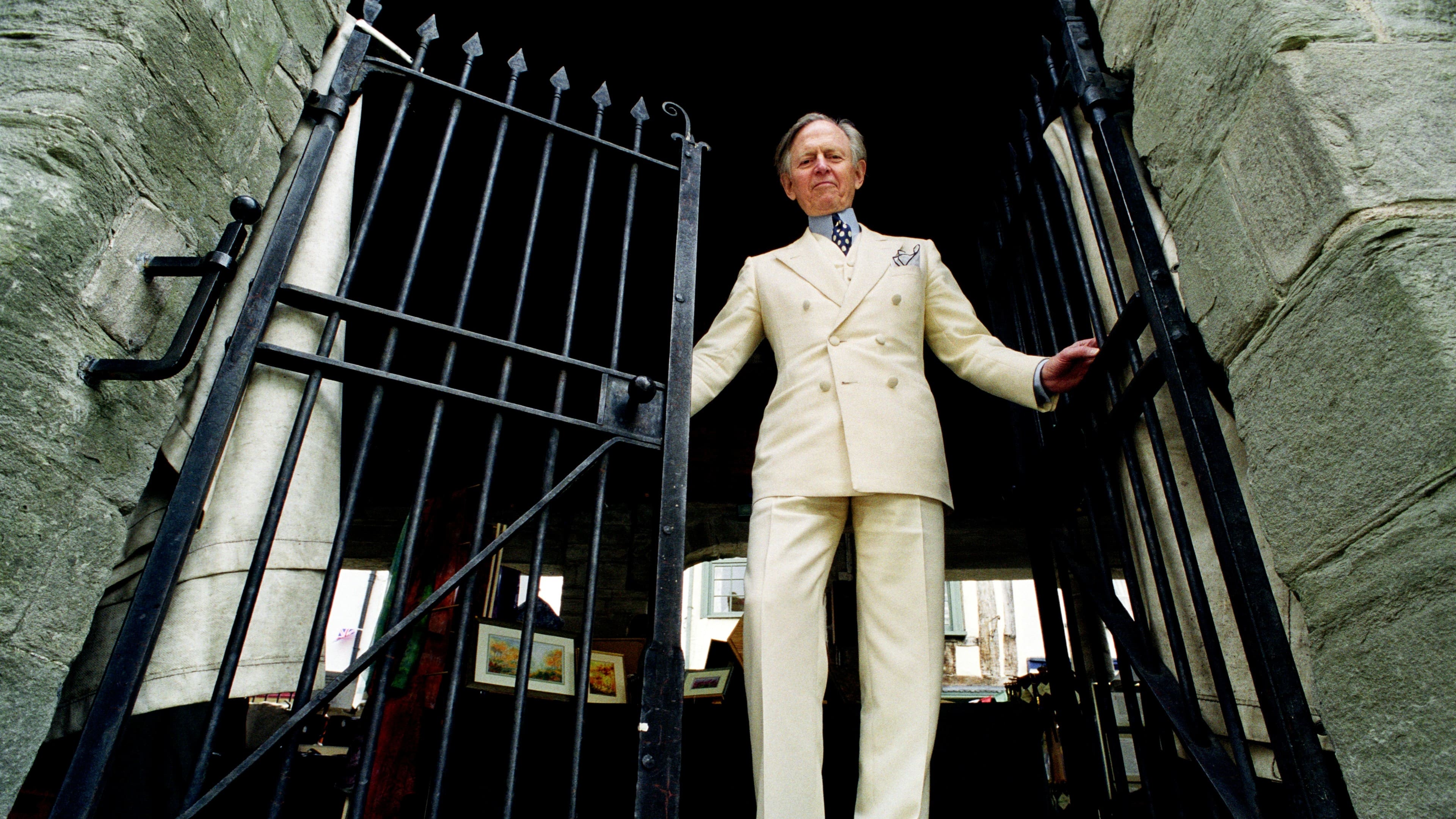

Radical Wolfe
With a distinctive style all his own, author and journalist Tom Wolfe reshapes how American stories are told.
Trailers & Videos 1

Radical Wolfe – Official Trailer
Cast


Ratings & Reviews
No community reviews yet. Be the first to share your thoughts!
TMDB Reviews
Brent Marchant
TMDB2 years ago
The impact that words carry can be tremendous, sometimes powerful enough to change everyday speech, the nature of literature and even an entire culture. And, in many cases, those shifts can be traced back to the musings of gifted, insightful individuals. That’s where author Tom Wolfe (1930-2018) enters, stage left, as seen in this new documentary from director Richard Dewey, based on a Vanity Fair article by author Michael Lewis. Wolfe, a onetime newspaper reporter, made his mark beginning in the 1960s with an Esquire magazine article about southern California’s hot rod and custom car culture that turned conventional journalism on its ear. Almost overnight, he became a New York and national media sensation, introducing what he called “the new journalism,” a practice of writing and reporting that called for drawing upon all of the literary tools available to authors of all stripes in the penning of nonfiction works, a move aimed at eliminating much of what he saw as the tiresome tedium that had come to characterize most of such pieces. Before long, over the next several decades, he established a reputation for cutting-edge writing through various magazine articles and such books as The Electric Kool-Aid Acid Test, Radical Chic & Mau-Mauing the Flak Catchers, The Right Stuff and From Bauhaus to Our House. He subsequently went on to release novels like The Bonfire of the Vanities and Man in Full. And several of these titles were even adapted as motion pictures, clips from which are liberally featured in this film biography. In addition to his prolific bibliography, Wolfe also distinguished himself as a character unto himself, a transplanted polite Southern gentleman and flamboyant sartorial dandy who could cut people to the quick with the stroke of his pen and wasn’t afraid of tackling controversial subjects that many of his contemporaries would never touch. His story is told in an admittedly somewhat conventional but exceedingly well-defined, economical, briskly paced...