Trailers & Videos 2
![4K Restoration Trailer [Subtitled]](https://img.youtube.com/vi/tLYJzEtmavg/hqdefault.jpg)
4K Restoration Trailer [Subtitled]
![Raise the Red Lantern (1991) ORIGINAL TRAILER [HQ]](https://img.youtube.com/vi/L0ATH3N1gsM/hqdefault.jpg)
Raise the Red Lantern (1991) ORIGINAL TRAILER [HQ]
Cast





Ratings & Reviews
No community reviews yet. Be the first to share your thoughts!
TMDB Reviews

Filipe Manuel Neto
TMDB3 years ago
In the context of oriental cinema, it's a good film... but it's very different from the cinema that we, in the West, are used to, and this difference ends up killing our interest in this work.
I think this movie was the first Chinese movie I saw, I'm not really sure. I am not an expert on the cinema of this country, but I can say that it is one of those films that you see without much special interest. Of course, I'm talking about the standard audience, because there are really oriental film lovers who will be more interested in this material.
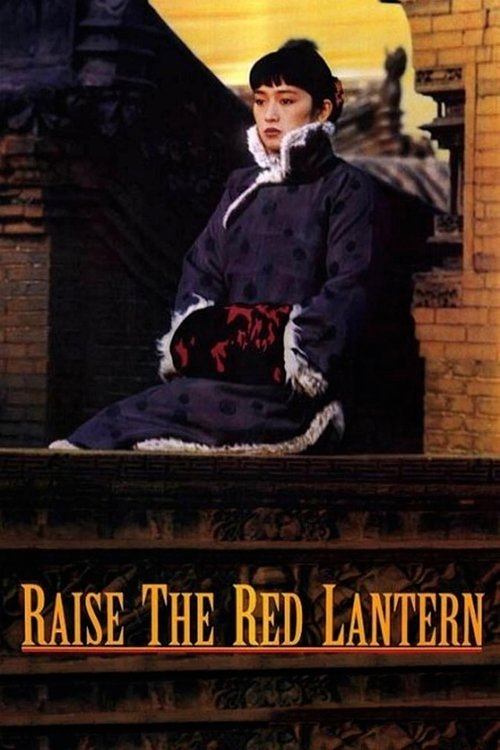
The script is based on the story of Song Lian, a very young and well-formed girl who, after her father's death, is coerced into finding a rich man to marry. She ends up being the fourth wife of a man, having to live with the other wives and learn how to behave in a complex family system, where rivalries and envy are part of everyday life.
The film shows us a type of family life that, for us in the West, is far from being understandable. It could only take place in strongly patriarchal societies, where the role of women is more than subordinate. It's not a great film, but it's frankly decent, and I don't rule out the likelihood that it's a classic of Chinese cinema (experts will opine better).
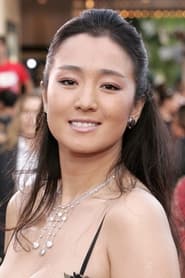
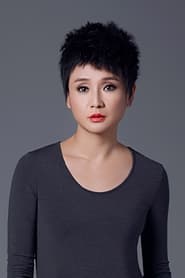
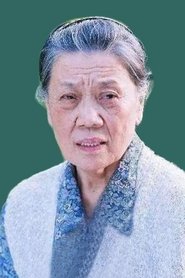
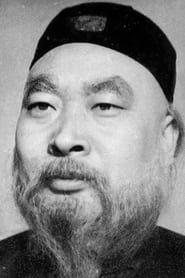
Gong Li does a very good job in the role of the young Song Lian, and is very well supported by Saifei He, Cuifen Cao, Lin Kong and Qi Zhao. Jingwu Ma doesn't do an inferior job either, in the role of the patriarch and husband of all those wives. The cinematography is very good, as are the costumes and sets, which take us back in time and geography. What prevented the film, perhaps, from being a greater success in the West was the lack of publicity and the difficulty in adapting to the environment of the film, which is very different from the cinema that Hollywood usually exports: it is much more meditative, passive and depressive than most of the cinema we used to see.

Priscilla Chu
TMDB1 year ago
Raise the Red Lantern:
Directed by Zhang Yimou, Raise the Red Lantern (大红灯笼高高挂) stands as a seminal work in Chinese cinema, premiering in 1991 and adapted from Su Tong's novel Wives and Concubines. The film achieved international acclaim, winning the Golden Lion at the Venice Film Festival and earning nominations for the BAFTA Award for Best Foreign Language Film, solidifying its status as a landmark critique of feudal patriarchy.
Theme: Critique and Reflection on Feudal Ethics
The theme of Raise the Red Lantern is profound and weighty, offering a comprehensive critique and reflection on feudal ethics through its portrayal of women's fates in the Chen family compound. While feudal ethics once played a role in social stability and development in Chinese history, by modern times, they had gradually become shackles restricting people's thoughts and actions. In the film, the drawbacks of feudal ethics are vividly displayed.
First, feudal ethics suppress and distort human nature. In the Chen family compound, women's personalities and desires are completely repressed, and they lose their basic rights and dignity as human beings. Songlian, originally a woman with independent thoughts and pursuits, is forced to abandon her ideals and become a vassal of men under the oppression of feudal ethics. The other concubines are no different—they resort to any means to gain favor, gradually losing themselves in intrigue and mutual harm. This distortion of human nature is a severe damage to the spiritual world by feudal ethics.
Second, feudal ethics oppress and exploit women. In a patriarchal society, women are in an absolutely vulnerable position, with their fates entirely in the hands of men. Master Chen, as the head of the Chen family, holds supreme power, deciding the life, death, honor, and disgrace of his concubines at will. To gain his favor, the concubines have to do everything they can, even sacrificing their dignity and personality. Once fallen...